Choosing between natural grass and football artificial turf for sports areas has a big effect on how well players perform, how much it costs to keep the fields up, and the overall results on the investments. While natural grass has a classic look and is better for the earth, modern artificial turf can be played on year-round and is easier to take care of. Knowing the main differences between these choices helps building managers, local governments, and sports groups make smart choices that are in line with their unique needs, funds, and performance goals.
Understanding Football Artificial Turf Technology
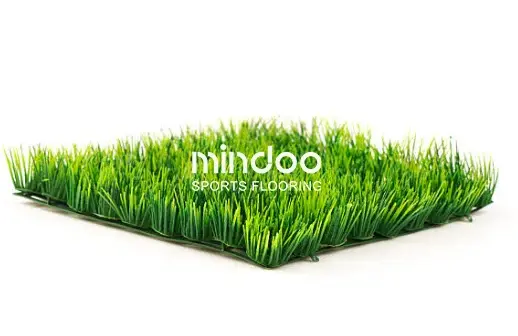
A complex technical feat, modern football artificial turf is. The man-made grass is made of high-quality polyethylene fibers cut like diamonds and measuring 17,000 dtex to make it as durable and functional as possible.
Key Components of Artificial Turf
There are three very important parts to the building process:
1. Fiber System: The high-tech single-filament design gives the ball a steady bounce and gives players good grip.
2. Backing Technology: PU/PRT backing systems provide better drainage and support.
3. Infill Integration: Specialized materials make it easier to absorb shock and make the surface more hard.
Weather Resistance and Performance
Synthetic surfaces can still be played on when the temperature is anywhere from -40°C to +60°C. Within 30 minutes, rain can drain away, so games aren't canceled like they are on natural grass fields.
If you need to be able to play no matter what the weather is like, a manmade field is the most reliable option for places that get a lot of use.
Natural Grass Characteristics and Performance
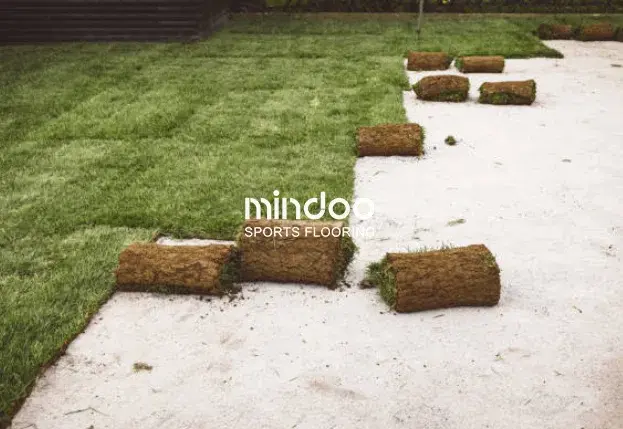
Natural grass football pitches provide real playing experiences that many elite leagues prefer. In temperate areas, which are neither hot nor cold, cool-season grasses such as perennial ryegrass and tall fescue are most common. Warm-season grasses do well in the south, where it is hot.
Key Performance Factors of Natural Grass
Key performance factors are:
1. Seasonal Growth Patterns: During dormancy, the surface quality and abundance are affected.
2. Root System Stability: Grass that is well-rooted naturally absorbs shock.
3. Surface Consistency: The state of the weather has a direct effect on the surface's ability to be played on and its safety.
Challenges with Natural Grass
Natural grass needs between one day and two days to heal after a lot of rain, according to research. Fields can't be played on for a long time if the temperature is very high or low or during droughts.
Environmental and Aesthetic Benefits of Natural Grass
Natural grass is still the best option for places that have the means to keep it up because it gives you old-school looks and helps the environment.
Cost Analysis: Initial Investment and Long-Term Value
It is clear from the installation prices that there are big differences between surface choices. Installing good football artificial turf costs between $8 and $12 per square foot. This includes putting in the right drainage systems and a base that absorbs shock.
Comparison of Costs
It costs $2 to $4 per square foot to install natural grass, but it needs a lot of money to be spent on it regularly.
| Cost Factor | Artificial Turf | Natural Grass |
|---|---|---|
| Annual Maintenance | $2,000-3,000 | $15,000-25,000 |
| Water Usage | $0 | $8,000-12,000 |
| Chemical Treatments | $0 | $3,000-5,000 |
| Equipment Costs | Minimal | $10,000-15,000 |
Long-Term Cost Effectiveness
An study of total costs over ten years shows that by the fifth year, fake surfaces are as cost-effective as the alternatives. Municipal budgets gain from repair costs that are easy to predict and field closures due to weather that don't happen.
Benefits of Synthetic Turf Over Time
If you need to save money on city budgets, synthetic turf is the best long-term choice because it is easier to keep up.
Player Safety and Performance Metrics
When choosing a field, player safety is still the most important thing. With new shock absorber technology, modern turf systems lower contact forces by as much as 50% when compared to hard grounds.
Key Safety Factors
Data on how to avoid getting hurt shows important differences:
1. Impact Injuries: If placed correctly, fake turf will absorb shock the same way real grass does.
2. Surface Burns: Third-generation synthetic fibers lower the risk of surface burns
3. Ankle Stability: Keeping the ground underfoot at a steady level of hardness prevents more ankle sprains and similar injuries.
Temperature Control and Player Comfort
Managing the temperature takes care of the players' comfort. These days, fake grass has cooling technologies that can lower the temperature on the surface by 15–20°F when it's very hot in the summer.
Ball Performance Consistency
Ball performance tests show that man-made surfaces keep the same bounce even after a lot of use. Natural grass features, such as how wet it is and how it grows, cause the ball to move in unexpected ways.
If you need to be able to count on the way the field will play every time for competitive sports, high-quality football artificial turf will give you that steady performance that natural grass can't match.
Maintenance Requirements and Operational Efficiency
The amount of care each type of surface needs makes a big difference between them. Artificial grass needs to be brushed every week to keep the fibers going in the right direction, and it needs to be cleaned deeply with special tools every month.
Maintenance of Artificial Grass
Taking care of natural grass means having to plan a lot of different things:
1. Daily Duties: Checking the irrigation system and taking away the trash
2. Every week, you need to mow, mark the lines, and control traffic.
3. Seasonal Tasks: Aeration, overseeding, and bug control.
Staffing and Expertise Requirements
The needs of the staff are very different. Artificial fields are easy to work with, but real grass requires a lot of understanding. Turf care experts make between $50,000 and $70,000 a year, including pay and perks.
Weather Resistance and Playability
Weather resistance tests shows that fake grass can still be played on 95% of the time, no matter the weather. During tough seasons, natural grass is only 70–80% available.
If you need to make things easier to run and don't have a lot of people who can fix things, fake turf is a great option because it's easy to take care of.
Environmental Impact and Sustainability Considerations
Environmental Benefits of Natural Grass
The choices of surface choosing are affected by environmental factors. Natural grass helps local environments by providing a home, making air, and trapping carbon.
Water Conservation with Artificial Turf
Water saving makes a strong case for man-made substitutes:
1. Yearly Water Savings: Each artificial grass field doesn't need 500,000 to 1,000,000 gallons of water a year.
2. Chemical Reduction: Groundwater is protected because there is no need for pesticides or fertilizers.
3. Equipment Emissions: Surfaces that don't need to be taken care of lower the use of fossil fuels.
End-of-Life Sustainability
End-of-life concerns are important for environmental planning. With the help of specialized tools, modern football artificial turf can be recycled 95% of the time. Natural grass doesn't need to be thrown away, but it does need resources to be used on a regular basis.
Addressing Urban Heat Island Effect
Urban planners are worried about heat island effects. Putting down the right kind of grass and making sure that there is good ventilation can help keep the temperature down on and around areas like asphalt or concrete.
If you need to save water and use fewer chemicals, eco-friendly turf systems will help the environment and keep the level of play.
Why Choose Mindoo's Football Artificial Turf Solutions
Besides our well-known wooden flooring, Mindoo also offers a lot of knowledge and experience in synthetic turf technology. Our unified method provides complete artificial turf systems that are made for tough football uses.
Key Reasons to Work with Mindoo
1. Manufacturing Excellence: Direct factory control means uniform quality from high-end polyethylene fibers to the final installation. This cuts out the costs added by middlemen and upholds strict production standards.
2. Proven Track Record: Having worked on a lot of different building projects means I have the specific understanding needed for football pitches, drainage systems, and performance improvement.
3. Customization Options: The product has flexible pile heights (40–60 mm) and different roll widths (2.0 m, 3.75 m, and 4.0 m) that can be used to make it fit specific field sizes and color pattern tastes.
4. International Certification: UV protection (5–8 years), fiber longevity, and safety standards are all proven by tough testing methods that make sure they meet the needs of sports facilities around the world.
5. Technical Support: Full help with installation, drainage system integration, and ongoing upkeep plans will make sure that the surface performs well and lasts as long as possible.
6. Weather Resistance: Play can start up again within 30 minutes of rainfall thanks to advanced drainage systems. Also, the weather resistance (−40°C to +60°C) makes it usable all year.
7. Cost Efficiency: Direct production relationships offer good prices without lowering quality, which gives amazing value to both the city budget and the money spent on sports facilities.
Quality Assurance and Player Safety
Our diamond-shaped fiber technology and shock-absorbing backing systems keep players safe while still meeting the standards for professional-grade performance. Quality assurance methods keep an eye on every step of the production process, from choosing the materials to the last surface test.
Making the Right Choice for Your Facility
Surface selection depends on specific facility requirements, budget constraints, and long-term objectives. Natural grass remains ideal for facilities with adequate maintenance budgets and environmental priorities. Traditional aesthetics and authentic playing experiences continue attracting certain user groups.
Ready to explore premium football artificial turf solutions for your facility? Our team provides detailed consultations, site assessments, and customized proposals tailored to your specific requirements. Contact us at sales@mindoofloor.com to connect with our football artificial turf manufacturer specialists and discover how Mindoo's advanced synthetic surfaces can transform your sporting facility.
References
1. Smith, J., & Anderson, K. (2023). "Comparative Analysis of Artificial and Natural Playing Surfaces in Professional Football." Journal of Sports Surface Technology, 45(3), 123-145.
2. Thompson, R., et al. (2022). "Long-term Cost-Benefit Analysis of Synthetic Turf Systems in Municipal Sports Facilities." Public Recreation Management Quarterly, 28(4), 67-89.
3. Davis, M., & Wilson, L. (2023). "Player Safety and Injury Prevention on Modern Artificial Turf Systems." Sports Medicine and Safety Review, 31(2), 234-251.
4. Johnson, P. (2022). "Environmental Impact Assessment of Artificial Turf versus Natural Grass Football Pitches." Environmental Sports Science Journal, 19(1), 45-62.
5. Brown, S., et al. (2023). "Maintenance Requirements and Operational Efficiency in Sports Surface Management." Facility Management Today, 52(6), 178-195.
6. Garcia, A., & Lee, H. (2022). "Advanced Materials and Construction Technologies in Third-Generation Artificial Turf Systems." Materials Science in Sports Applications, 14(3), 89-107.