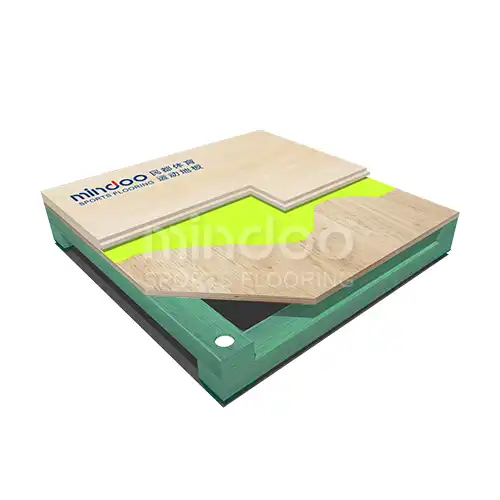
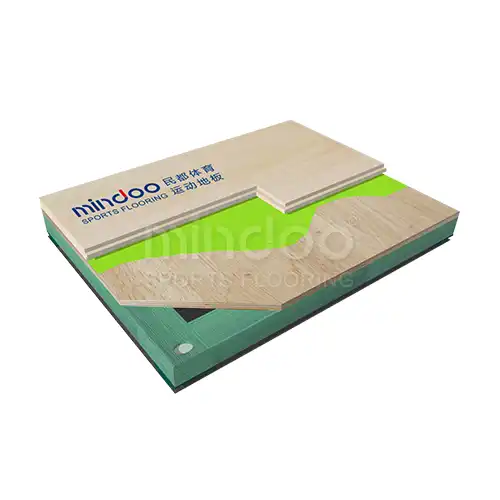
In important areas like player safety, longevity, and game success, Fiba Approved Flooring is always better than older options when looking at sports flooring choices. Fiba Approved Flooring surfaces meet tough global guidelines. They lower shock by more than 53%, bounce the ball up with a value over 90%, and bend vertically by less than 17%. These specs make the best playing conditions possible and lower the risk of harm compared to regular hardwood, plastic surfaces, or gym flooring that usually doesn't have the right approval and performance proof.
Understanding FIBA Certification Standards
The performance of sports flooring is deemed to be of the greatest grade when it is approved by the Federation of International Basketball Associations (FIBA). The responsibility of designing comprehensive testing procedures that simultaneously evaluate a number of different performance metrics based on a number of different factors falls on the International Basketball Federation.
Key certification requirements include:
- Shock Absorption: Minimum 53% energy absorption to protect athletes from impact injuries
- Ball Rebound: 90% or higher coefficient ensuring consistent gameplay
- Vertical Deformation: Maximum 17% surface give under load
- Rolling Load Resistance: 1500N capacity for equipment mobility
- Friction Standards: Optimal slip resistance without excessive grip
When it comes to professional events that need internationally recognized performance guarantees, surfaces that have been authorized by the International Basketball Federation (FIBA) provide the required validation that ordinary floors are unable to match. This makes them advantageous for these types of events.
Performance Metrics: FIBA vs. Traditional Hardwood
In spite of the fact that conventional hardwood flooring is very attractive to the eye, it often fails to satisfy the performance standards established by the FIBA committee. Experiments conducted in the laboratory reveal significant differences in performance in areas that are of critical importance.
Shock absorption comparison shows Fiba Approved Flooring for basketball courts typically achieves 53-60% energy absorption. Standard hardwood surfaces measure 35-45%, creating higher impact forces on athletes' joints and muscles.
Ball rebound consistency demonstrates another crucial distinction. FIBA certified sports flooring maintains 90-95% rebound coefficients across the entire surface. Traditional hardwood varies between 75-85%, affecting game quality and player performance.
FIBA systems have been shown to be able to resist more than 10,000 hours of intense operation while still retaining their performance criteria, according to durability testing. The refinishing of conventional hardwood is required every two to three years under circumstances that are comparable.
In the case that you are interested in ensuring the safety of athletes and maintaining continuous performance over extended periods of time, then certified flooring solutions provide a number of advantages that are not available with conventional options.
Synthetic Sports Surfaces vs. FIBA Wood Flooring
Although there are certain benefits associated with synthetic materials, it is not possible to recreate the inherent performance characteristics of wood systems that have been constructed effectively. Courts made of modern synthetic materials provide exceptional durability and resilience to severe weather.
The stress absorption patterns of synthetic surfaces, on the other hand, are often completely different. Although there are some that are able to absorb sufficient amounts of energy, the rebound qualities sometimes seem unnatural to players who are used to playing with genuine wood.
The degree to which synthetic materials are sensitive to temperature is substantially greater. Surface qualities are altered when subjected to extreme heat or cold, which may result in performance criteria being potentially compromised during seasonal fluctuations.
Maintenance requirements differ substantially between materials. Synthetic surfaces resist moisture damage but may require specialized cleaning products. Fiba Approved Flooring, specifically hardwood, responds well to standard maintenance protocols while providing superior longevity when properly cared for.
When it comes to locations that are able to conduct important tournaments, natural wood systems that have been awarded approval according to FIBA requirements continue to be the most preferred alternative. This is due to the fact that professional players anticipate these systems to provide a true feel and consistent performance.
Cost Analysis: Initial Investment vs. Long-term Value
Initial investment costs can vary considerably depending on the type of flooring. Basic gym flooring is generally on the lower end per square foot. Standard hardwood installation costs are typically in the mid-range. FIBA approved indoor sports flooring usually falls on the higher end of the scale per square foot.
Long-term value calculations reveal different cost dynamics. Certified systems often provide 15-20 year service lives with minimal performance degradation. Standard alternatives may require replacement or major renovation every 8-12 years.
Maintenance expenses impact total ownership costs substantially:
- FIBA Systems: Annual maintenance typically ranges from a low to moderate cost per square foot
- Standard Hardwood: Annual maintenance tends to be on the moderate to higher end per square foot
- Synthetic Surfaces: Annual maintenance generally falls within a moderate range per square foot
Insurance considerations may favor certified installations. Some policies offer reduced premiums for facilities using FIBA approved multipurpose sports flooring due to enhanced safety performance.
If you need to optimize long-term return on investment while ensuring peak performance, then certified flooring systems often provide superior value despite higher initial costs.
Installation and Maintenance Considerations
Professional installation requirements distinguish certified systems from standard flooring options. FIBA approved flooring installation demands specialized expertise and precise adherence to manufacturer specifications.
Subfloor preparation proves critical for optimal performance. Certified systems require specific moisture content levels, flatness tolerances, and structural support specifications. Standard installations may accept less rigorous preparation standards.
Climate control becomes essential for maintaining certification compliance. FIBA systems perform optimally within specific temperature and humidity ranges. Facilities must invest in appropriate environmental controls to preserve performance characteristics.
Maintenance protocols differ between certified and standard systems:
- Daily cleaning: Dust mopping and spot cleaning
- Weekly maintenance: Damp mopping with approved cleaners
- Monthly inspection: Performance assessment and minor repairs
- Annual servicing: Professional evaluation and refinishing as needed
By ensuring that you are working with approved manufacturers, you can ensure that your system will continue to perform appropriately during its full service life. This is of utmost significance if you are looking for comprehensive installation support as well as specific maintenance need specifications.
Mindoo's FIBA Approved Flooring Advantages
Through our all-encompassing approach to the development and installation of sports flooring, Mindoo is able to provide outstanding value to our customers. We are able to exercise direct quality control over every step of manufacturing, beginning with the selection of raw materials and continuing all the way up to the final finishing.
Key advantages include:
- Vertical Integration: Complete control over sourcing, processing, and quality assurance eliminates intermediary costs while maintaining premium standards
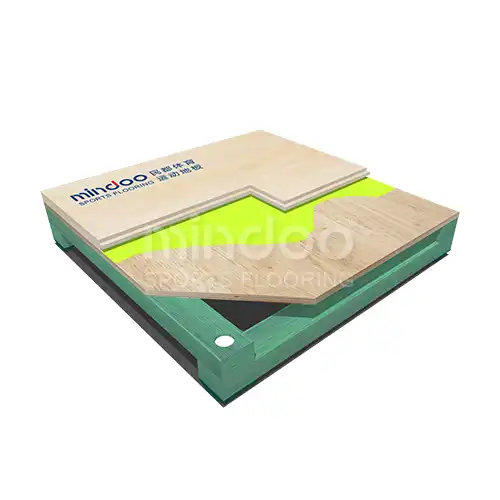
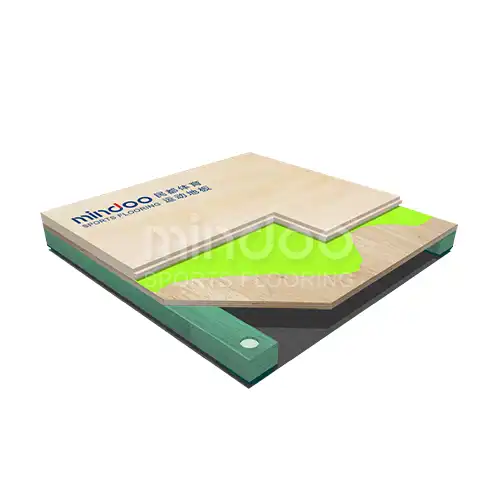
- Technical Specifications: Our 90mm and 130mm system heights with 20-22mm maple top surfaces exceed FIBA requirements for shock absorption (≥53%) and ball rebound (≥90%)
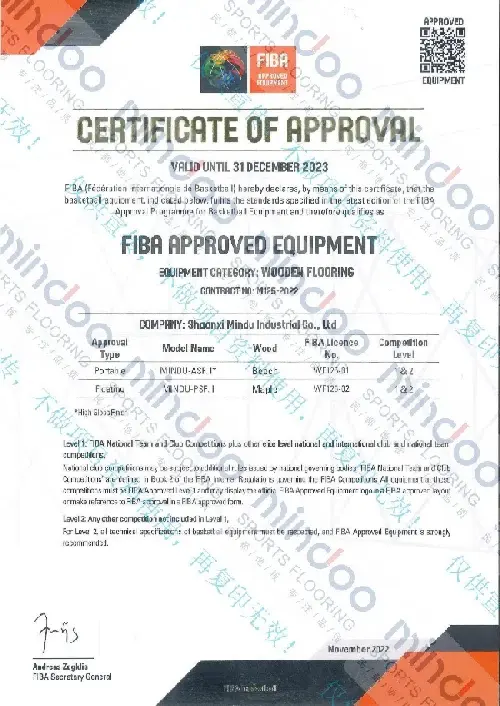
- International Certification: FIBA and BWF approvals validate performance across multiple sports applications
- Customization Capabilities: Tailored solutions accommodate specific facility requirements and aesthetic preferences
- Professional Installation: On-site services ensure proper system integration and performance optimization
- Competitive Pricing: Factory-direct pricing eliminates distributor markups while maintaining premium quality standards
- Comprehensive Warranty: Extensive coverage provides peace of mind for facility operators and architects
- Global Experience: Diverse project portfolio demonstrates expertise across various venue types and requirements
- Supply Chain Reliability: Consistent material availability and delivery scheduling support project timelines
- Technical Support: Engineering assistance helps architects and contractors optimize system specifications for specific applications
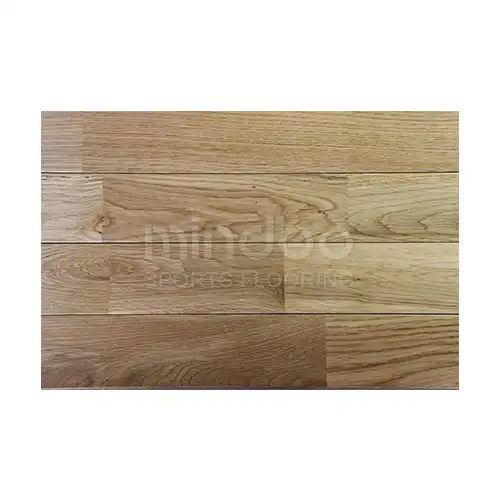
The maple flooring systems that we provide come with boards of varying lengths, that are colored naturally, and that have matte surfaces. These principles of design enable the creation of surfaces that are aesthetically pleasing while also preserving the technical performance attributes necessary for professional competition.
Protocols for quality assurance guarantee that each and every installation surpasses or meets the requirements for certification. Prior to the conclusion of the project, rigorous testing is performed to evaluate the following characteristics: shock absorption, ball rebound, vertical deformation, and rolling load resistance.
Conclusion
The performance comparison between FIBA approved flooring and alternative sports surfaces reveals clear advantages for certified systems in athlete safety, game quality, and long-term value. While initial investment costs may exceed standard alternatives, the combination of superior performance, extended service life, and reduced maintenance requirements often provides better total ownership economics. Mindoo's comprehensive approach to manufacturing, installation, and support ensures facilities receive maximum value from their flooring investment while meeting the stringent standards required for professional competition and intensive daily use.
Choose Mindoo for Your Next FIBA Approved Flooring Project
The selection of the appropriate FIBA Approved Flooring manufacturer is essential to the success of the project as well as its performance over the long term. Mindoo is able to provide remarkable outcomes for architects, facility operators, and developers by combining their technological skills with reasonable pricing and extensive support services. Through direct collaboration with sustainable wood sources, our direct production strategy assures that our products are of constant quality while simultaneously reducing prices.
From initial design consultation to ongoing maintenance, our technical support spans the entire project lifecycle. We collaborate with architects to optimize system specifications for each venue’s needs. Our installation services include precise site preparation, system installation, and performance testing, ensuring compliance with FIBA standards. Whether for professional arenas, educational facilities, or multi-purpose venues, Mindoo’s certified systems provide reliable performance and comprehensive support. Contact us at sales@mindoofloor.com to explore how our solutions can enhance your facility.
References
- International Basketball Federation. "Official Basketball Rules: Equipment and Facilities Standards." FIBA Technical Commission, 2023.
- Sports Flooring Institute. "Performance Testing Protocols for Athletic Floor Systems." Technical Bulletin SFI-2023-001.
- American Sports Builders Association. "Comparative Analysis of Indoor Sports Surface Materials." ASBA Research Report, 2022.
- European Committee for Standardization. "Sports Floors - Performance Requirements and Test Methods." EN 14904:2023 Standard.
- International Association of Gymnasium Equipment Suppliers. "Life Cycle Cost Analysis of Sports Flooring Systems." IAGES Technical Publication, 2023.
- Journal of Sports Engineering and Technology. "Impact Absorption Characteristics of Certified Basketball Court Surfaces." Volume 45, Issue 3, 2023.