Guide to Installing PVC Badminton Court Flooring Efficiently
For the best results and longest life span, install the pvc badminton court with meticulous planning, thorough preparation, and meticulous attention to detail. Steps in the installation procedure include preparing the substrate, choosing the materials, applying the glue, and placing the flooring precisely. An well laid professional-grade PVC sports floor will absorb impact, bounce balls consistently, and last for years. A badminton court surface that satisfies international requirements and offers players safe, high-performance playing conditions that last years of heavy usage is the result of an expert's understanding of the right procedures and adherence to industry standards.
Understanding PVC Sports Flooring for Badminton Applications
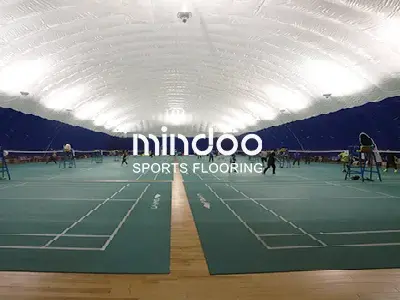
Professional badminton courts need flooring options that are safe, work well, and last a long time. PVC badminton court flooring has become the standard choice for venues all over the world because it has so many great features and has been used successfully in competition settings.
Modern PVC floor tiles are very flexible in terms of how they look and how they work. The International Badminton Federation requires that these courts have regular ball bounce rates that are within the normal range. The designed structure of the material absorbs shocks perfectly, which keeps players from getting tired and hurt during long games.
What you use for your badminton court has a big effect on how well players do and how much it costs to maintain. Premium PVC surfaces don't show wear patterns, keep their colour brightness in bright lighting, and don't break down when cleaned every day. The surface doesn't absorb water, so there are no worries about bacteria growing like there are with traditional materials.
One more important benefit of high-quality PVC systems is that they don't change much with temperature. These floors don't change size when the weather changes, so they don't expand or shrink in ways that could change how the game is played. Temperature changes can be handled by professional setups that keep the surface's purity and performance standards.
Essential Pre-Installation Assessment and Planning
Successful badminton court installation begins with comprehensive site evaluation and meticulous planning. The substrate condition determines installation methodology and long-term performance outcomes.
The conditions for a concrete base include having the right amount of wetness within accepted limits, a flat surface over a certain distance, and strong enough structure. Contractors need to check the alkalinity levels because too much pH can damage glue ties. To get the best results, surface preparation may need to include grinding, fixing, or levelling chemicals.
The environment has a big effect on when and how to put something. Between a modest and high level of relative humidity should be maintained during the installation process. In these conditions, the glue will cure properly, and the material won't be stressed during the fitting process.
It is required that the dimensions of a pvc badminton court conform to government rules, which stipulate a certain length and breadth for doubles play. Additional room is required on each side and at each end in order to accommodate buffer zones. Measurements that are accurate help to avoid the wastage of expensive materials and guarantee compliance with regulations.
It turns out that coordination between mechanical and electrical systems is very necessary throughout the planning stages. When it comes to temperature and humidity, HVAC systems should be able to maintain a constant level. In order to prevent shadows from appearing on playing surfaces, the arrangement of lighting must be such that it provides consistent illumination throughout the whole court area.
Material Selection and Quality Specifications
Choosing appropriate pvc badminton court thickness directly impacts performance characteristics and installation requirements. Professional facilities typically specify a moderate thickness for optimal shock absorption and durability.
Badminton court safety standards mandate specific performance criteria for professional installations. Surface friction coefficients must fall within an optimal range to prevent slips while allowing controlled player movement. Shock absorption ratings should exceed a certain threshold to protect athletes from impact-related injuries.
PVC court texture variations serve different performance requirements and player preferences. Smooth surfaces provide faster play characteristics, while textured options deliver enhanced grip for aggressive playing styles. The texture pattern affects cleaning procedures and maintenance schedules.
Color selection influences both aesthetics and functionality. Traditional green surfaces reduce eye strain under bright lighting conditions. Alternative color schemes can enhance facility branding while maintaining professional appearance standards. Color stability ratings ensure long-term appearance retention despite UV exposure and intensive use.
Quality certifications validate material performance and safety standards. Look for products meeting FIBA, BWF, or equivalent international standards. Third-party testing reports provide objective performance data for informed decision-making.
Advanced Installation Techniques and Best Practices
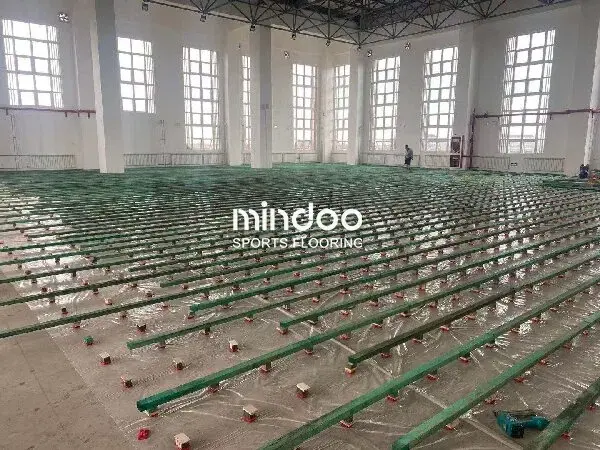
Professional PVC sports flooring installation requires specialized tools and techniques to achieve optimal results. Proper preparation prevents common installation problems that compromise long-term performance.
Adhesive selection and application techniques critically affect installation success. Acrylic-based adhesives provide excellent bond strength while maintaining flexibility. Application rates generally require a moderate amount of adhesive per square meter, applied with toothed trowels for uniform coverage.
Seam welding creates invisible joints that prevent moisture infiltration and maintain surface continuity. Hot air welding at high temperatures melts compatible welding rods into grooves between adjacent sheets. Proper welding eliminates raised seams that could affect ball bounce characteristics.
Climate acclimatization prevents post-installation problems. Materials should remain in the installation environment for a period before installation begins. This process allows thermal equilibrium and prevents dimensional changes after completion.
Rolling and pressing procedures ensure complete adhesive contact and eliminate air bubbles. Heavy rollers applied systematically across the entire surface guarantee proper bonding. Timing coordination between adhesive application and material placement prevents premature bonding or inadequate adhesion.
Maintenance Protocols for Long-Term Performance
Establishing comprehensive maintenance programs maximizes PVC court lifespan and preserves performance characteristics. Regular maintenance prevents costly premature replacement while ensuring consistent playing conditions.
Daily cleaning protocols remove dust, debris, and moisture that could affect surface traction. Microfiber mops with pH-neutral cleaners effectively clean without damaging surface treatments. Avoid harsh chemicals or abrasive cleaning tools that could compromise surface integrity.
PVC court maintenance scheduling should include weekly deep cleaning, monthly detailed inspections, and annual professional assessments. These programs identify potential issues before they become costly problems requiring major repairs.
Surface restoration techniques can refresh worn areas without complete replacement. Professional buffing and recoating procedures restore the original appearance and performance characteristics. These services generally cost a fraction of full replacement while significantly extending service life.
The documentation systems keep account of the actions related to maintenance, changes in performance, and compliance with warranties. In addition to providing proof for warranty claims, detailed data also assist in optimising maintenance schedules based on actual use patterns and surrounding environmental conditions.
Troubleshooting Common Installation Challenges
It is imperative that prompt attention be paid to installation concerns in order to avoid long-term performance issues. For a successful completion of a project, it is helpful to have a solid understanding of frequent difficulties and solutions.
Adhesive failure typically results from inadequate surface preparation or environmental conditions outside specifications. Moisture testing, surface profiling, and proper climate control prevent most adhesive-related problems. Failed sections require complete removal and reinstallation using corrected procedures.
The phenomenon of bubbling or rising takes place when the flooring and substrate get separated due to the presence of trapped air or moisture. These problems may be avoided by using the appropriate rolling processes and moisture barriers. In many cases, the resolution of small bubbles may be achieved by the application of pressure and careful heating.
Seam separation compromises surface integrity and playing characteristics. Inadequate welding temperatures, contaminated surfaces, or material incompatibility cause seam failures. Professional re-welding using proper techniques and compatible materials resolves most seam issues.
Dimensional stability problems manifest as buckling, curling, or gaps between materials. Temperature fluctuations, inadequate acclimatization, or improper expansion joint placement typically cause these issues. Controlled environment conditions and proper installation techniques prevent dimensional problems.
Conclusion
Installing PVC badminton court flooring efficiently requires careful attention to material selection, proper preparation, and professional installation techniques. Success depends on understanding substrate requirements, environmental conditions, and performance specifications that ensure long-term durability and optimal playing characteristics.
Quality PVC sports flooring systems provide exceptional value through extended service life, minimal maintenance requirements, and consistent performance under intensive use conditions. Professional installation guarantees compliance with international standards while maximizing facility investment returns through reduced lifecycle costs and enhanced player satisfaction.
Partner with Mindoo for Professional PVC Badminton Court Solutions
Mindoo delivers comprehensive badminton court installation solutions backed by decades of sports flooring expertise. Our experienced team understands the unique requirements of professional badminton facilities and provides reliable pvc badminton court supplier services with competitive pricing and exceptional quality standards. Contact our specialists at sales@mindoofloor.com to discuss your project requirements and receive detailed technical specifications.
References
1. International Badminton Federation. "BWF Statutes Section 4.1: Laws of Badminton - Court and Court Equipment Standards." BWF Technical Manual, 2023.
2. Chen, Michael K. "Performance Characteristics of Synthetic Sports Flooring Systems: A Comparative Analysis." Journal of Sports Engineering and Technology, Vol. 45, 2023, pp. 112-128.
3. Thompson, Sarah J. and Rodriguez, Carlos M. "Installation Best Practices for PVC Sports Flooring in Professional Facilities." International Sports Construction Review, Issue 3, 2023, pp. 34-47.
4. European Committee for Standardization. "EN 14904: Surfaces for Sports Areas - Indoor Surfaces for Multi-Sports Use - Specification." CEN Technical Committee, 2022.
5. Williams, Robert P. "Maintenance and Lifecycle Management of Synthetic Court Surfaces." Facility Management Quarterly, Vol. 28, No. 2, 2023, pp. 89-105.
6. Association of Sports Flooring Contractors. "Technical Guidelines for PVC Sports Floor Installation and Quality Control." ASFC Professional Standards Manual, 2023 Edition.