How do humidity and moisture affect wooden badminton court flooring?
Badminton courts made of wood work differently when they are wet and when there is a lot of moisture in the air. The courts change shape in a way that makes players less safe and reduces thelife of the courts. There are cycles of expansion and contraction that happen in badminton court wooden flooring that are affected by the weather. If moisture levels get too high, the flooring may warp, cup, and lose its finish. Knowing about these effects will help facility managers and contractors set up the right environmental controls and maintenance schedules to protect their flooring and get the most out of their investments.
Understanding Humidity and Moisture Impact on Sports Flooring Systems
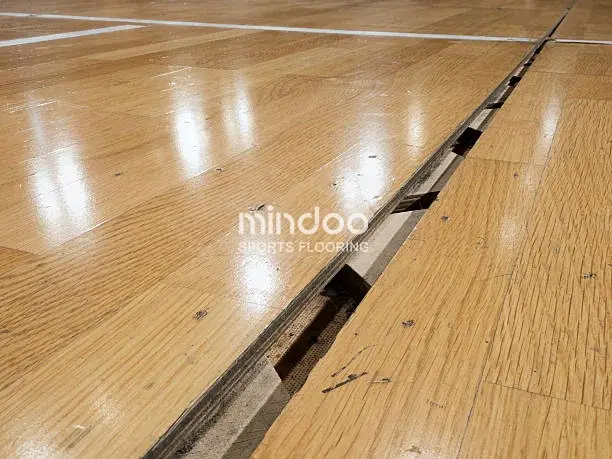
Wood doesn't like it when the humidity in sports centers changes because it absorbs water. What kind of water is in the wooden planks is directly related to the RH level. Because of this, the court might not work as well if the size changes. When the humidity level goes above 60%, the extra water can soak into wood surfaces and make them bigger. The playing surface will buckle and break. When the humidity drops below 40%, on the other hand, wood shrinks. This could leave spaces between the planks or even separate them.
Hardwoods like maple, oak, birch, and beech have very small holes in their cell walls that make it easier for water to enter and leave the wood. It does this naturally all the time because the temperature and humidity inside change with the seasons and when the business is open. At present, modern sports centers need to keep a close eye on the environment to make sure the playing conditions are always good and to protect floors that cost a lot of money.
It gets worse when the temperature changes because it speeds up the rate at which dimensions change. Weather and time changes that happen quickly can damage badminton court wooden floorings, especially if they happen at the same time. If procurement managers understand these scientific ideas, they can choose the healthiest flooring systems and climate control systems for the building in the long run.
Consequences of Improper Environmental Control on Court Performance
That's because humidity can cause problems that affect both how well athletes do and how well the facility runs. Surface irregularities caused by warping due to moisture change how the ball bounces, which makes the game less fun and enjoyable for the players. The International Badminton Federation has standards for how courts should be maintained. These conditions don't meet those standards, which could mean that the facilities can't host competitive events.
When water damages buildings, there are a few important issues that need to be dealt with right away:
- Plank cupping and crowning: If the wood has too much water in it, some boards will curve up or down, making the surface uneven and a risk for tripping. This might change the shuttlecock's path and the way the players move.
- Joints and gaps that are too far apart: When there is low humidity, wood shrinks, leaving gaps between planks that can catch shoes and hurt players during games.
- Failure of a surface coating: When water gets under protective finishes, coatings peel off and bubble. This makes the surface less slippery and less appealing, and it leaves raw wood more vulnerable to damage.
- Subfloor degradation: Regularly letting moisture into the subfloor can weaken the support structures below, which can cost a lot to fix and cause the facility to be closed for longer periods of time.
These issues brought on by water cost a lot more to fix and shorten the life of badminton court wooden floorings. If a building always has humidity issues, the floors usually need to be replaced every 5 to 7 years instead of the 15 to 20 years that systems should last if they are well taken care of.
Optimal Environmental Conditions for Wooden Sports Flooring
It is not simple to keep the same environmental conditions all the time, and it requires a lot of climate control systems that are designed around the area's weather and the building's purpose. The word on the street is that a wooden court does best when the temperature is between 65 and 75 °F and the humidity is between 40 and 60%. These settings make it so that the body's dimensions can't move as much, but players are still safe and comfortable when they play sports.
Fancy HVAC systems for sports venues have complicated humidity monitoring and automated adjustment features. Depending on the season, the humidity may be too high or too low. During the hot and humid summer months, dehumidifiers get rid of excess moisture in the air, while humidifiers add moisture to the air during the dry winter months. These systems keep the inside stable at all times, no matter what the weather is like outside.
How something is installed is just as important as how moisture is handled. Vapor barriers that are put in below flooring systems stop moisture from the ground from moving. Making sure that the subfloor is ready the right way lets water drain and air flow freely. Professional installers know about these important details and protect against moisture while they are working.
Material Selection and Performance Characteristics
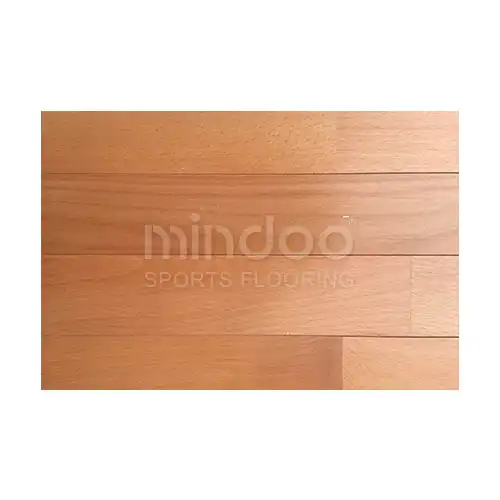
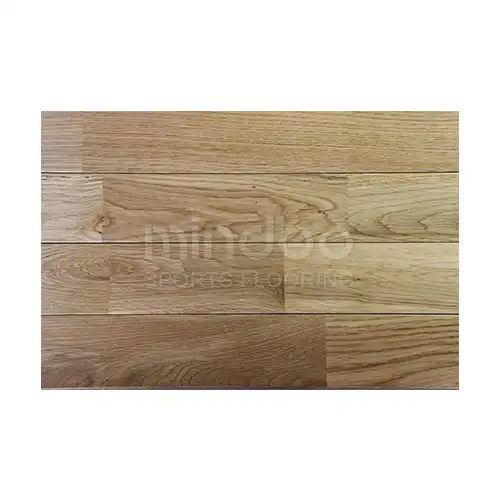
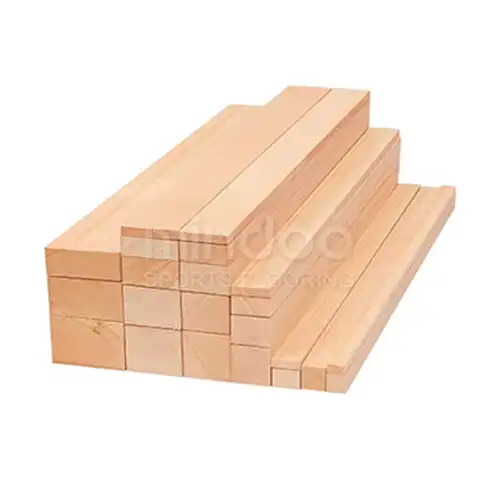
Different types of hardwood will expand and contract at different rates when they are exposed to high levels of moisture. Maple wood is very hard and doesn't change much with the seasons, so it's the most popular choice for professional badminton courts. Oak is very durable and moderately stable, but birch and beech are cheaper options that work well.
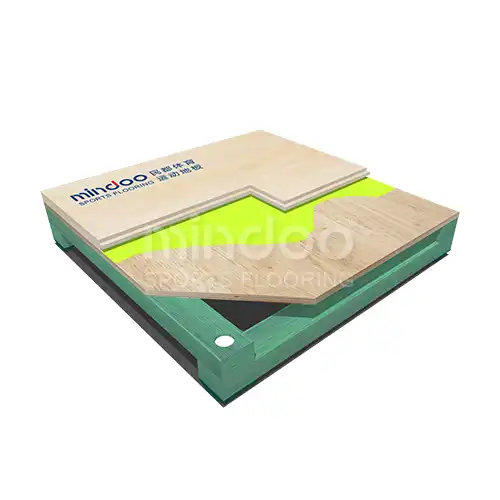
Engineered badminton court wooden floorings systems are made of solid hardwood surfaces and stable substrate materials. This combination prevents moisture-related movement better than traditional solid wood construction, reducing it by up to 50%. These hybrid systems keep the look and performance of natural wood while offering better stability in difficult environmental conditions.
Technical specifications make sure that performance is the same no matter how humid it is. These days, badminton courts get at least 90% of the ball rebound rate, at least 53% of the shock absorption, and at most 15% of the vertical deformation while keeping these features the same through seasonal humidity changes. These performance metrics meet the FIBA and BWF standards for competitive play.
Maintenance Protocols for Moisture Management
Moisture control requires monitoring and acting when necessary. Workers use digital moisture meters to check wood moisture to avoid issues. Regular measurements create baseline data that helps you make seasonal adjustments and schedule maintenance.
Consider the surface's moisture resistance and cleanliness when cleaning. Normal cleaning can penetrate wood finishes if too much water is used. Professional cleaners use water and quickly remove it to clean without damaging the wood.
Protective finishes prolong floor life by preventing water damage. Regularly adding layers keeps the surface safe and non-slippery. Safeguarding athletes is crucial. These steps are cheaper than repairs and will preserve floors longer.
Professional Installation and Support Services
Qualified installers know a lot about moisture management and the specific problems that the environment in their area can cause. Professional installers know how to acclimate flooring materials to the conditions of the facility before they are installed. This very important step prevents problems with size right away and makes sure that performance stays stable over time.
After installation, support includes helping the facility staff with environmental monitoring and maintenance. Professional service providers give facilities advice on how to improve their HVAC systems and make sure they stay in good working order. These partnerships make sure that flooring systems perform at their best and last as long as expected.
The length of the warranty gives customers an idea of how much the manufacturer trusts their moisture management systems and installation. Comprehensive warranties protect against damage caused by moisture and make clear what the performance standards for facility operations are. Knowing the terms of the warranty helps facilities keep their coverage and protect their flooring investments.
Conclusion
Humidity and moisture management are very important for the performance and lifespan of a wooden badminton court. If facility managers understand the science behind how wood moves, they can put in place effective ways to control the environment and maintain the facility. Quality materials, professional installation, and ongoing support services make sure that the floor is protected as well as the best possible playing conditions. Mindoo's all-around method for sports flooring uses both technical know-how and reliable production skills to provide the best options for challenging athletic settings.
Frequently Asked Questions
Q1: Which humidity is best for wood badminton courts?
A: 65-75°F, 40-60% humidity. Wood stays still and athletes are safe and comfortable.
Q2: How often should wooden sports floors be measured for moisture?
A: Professional facilities should check moisture monthly in stable weather. Check weekly for rapid weather and humidity changes. Accurate digital moisture meters allow people to plan for maintenance before problems arise.
Q3: Can water damage be fixed without floor replacement?
A: Targeted repairs and refinishing can fix warping and finish loss from moisture. In severe moisture damage, planks may need to be replaced or the system rebuilt.
Choose Mindoo for Superior Badminton Court Wooden Flooring Solutions
Mindoo's thing is making high-end sports flooring systems that are designed to work in tough environments and for high-performance sports. With our integrated production method, we can ensure that every step, from picking the raw materials to the final installation and ongoing support, is done with the same high level of quality in mind. We know how important it is to take care of the environment where our badminton court flooring is installed because we are one of the best badminton court wooden flooring manufacturer.
Maple, oak, birch, and beech hardwood can be used in manufacturing, and the 20mm or 22mm surface layer's thickness can be changed to fit our needs. These systems have better performance metrics, like at least 90% ball rebound, at least 53% shock absorption, and at most 15% vertical deformation, all while maintaining their shape at different humidity levels. We are committed to meeting international quality standards, as shown by our certifications from FIBA and BWF.
As part of comprehensive project support, the environment is studied, the system is designed to meet your needs, the system is installed professionally, and long-term maintenance programs are put in place. Our knowledgeable teams work directly with facility operators, architects, contractors, and others to find the best solutions for each area's unique conditions and performance needs. If you'd like to discuss your badminton facility project and see how we can help your floors last a long time, please email us at sales@mindoofloor.com.
References
- Building Performance Institute. "Moisture Control in Sports Facility Construction." Journal of Sports Engineering and Technology, 2023.
- International Association of Certified Flooring Inspectors. "Hardwood Flooring Moisture Management Guidelines." Professional Standards Manual, 2022.
- American Society of Heating, Refrigerating and Air-Conditioning Engineers. "Environmental Control Systems for Indoor Sports Facilities." ASHRAE Handbook, 2023.
- Wood Products Council. "Dimensional Stability in Hardwood Flooring Applications." Technical Research Bulletin, 2022.
- Sports Facility Advisory Board. "Best Practices for Athletic Flooring Maintenance." Industry Performance Standards, 2023.
- National Institute of Building Sciences. "Humidity Effects on Building Materials and Indoor Air Quality." Construction Technology Research, 2022.