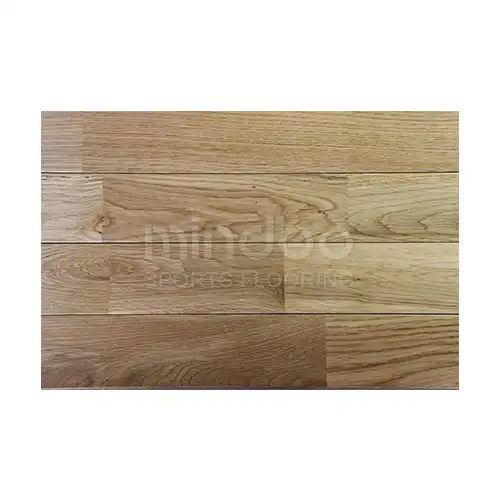
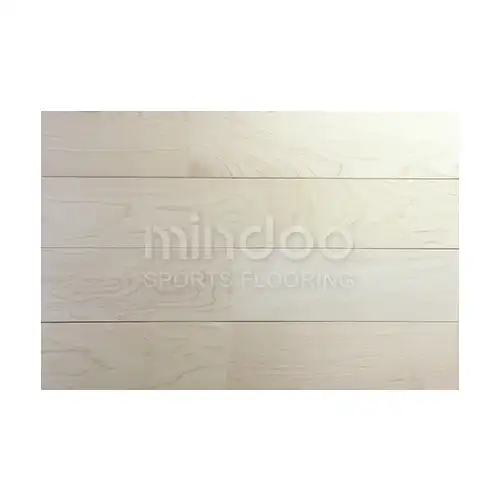
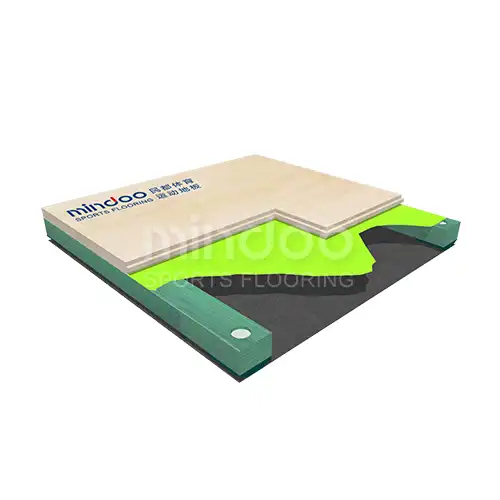
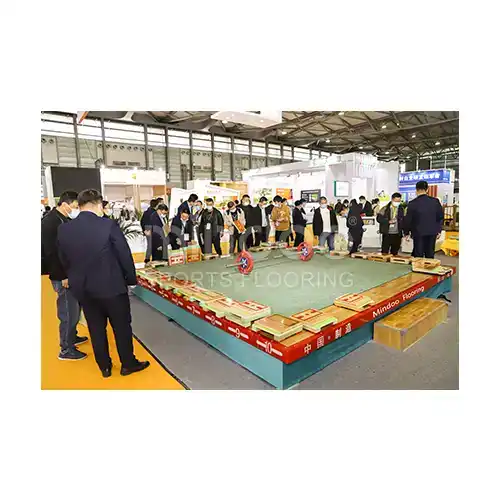
The main difference between wooden and plastic court surfaces is how they are made and what materials they are made of. This affects how the ball bounces and how players move on the court. Good Badminton Court Wooden Flooring has more consistent bounce and better shock absorption, while vinyl has a more controlled, smaller bounce. These differences make each game play different, which affects both game strategy and player success.
Understanding Surface Material Science and Ball Physics
The interaction between shuttlecock and court surface involves complex physics that every facility operator should understand. Badminton Court Wooden Flooring creates a dynamic response system through its natural fiber structure and engineered underlayment systems.
Professional sports flooring is made from maple, oak, birch, or beech wood, and each has its own stiffness. Maple wood floors are great at returning energy because the structure of their cells makes tiny compressions that store and release energy effectively. Hardwood is a great choice for high-performance floors in sports because of this.
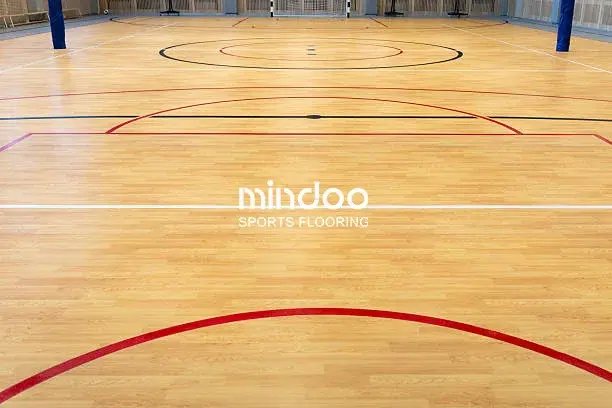
Vinyl surfaces operate differently through synthetic polymer matrices. These materials absorb impact energy but convert it to heat rather than returning it as kinetic energy. This fundamental difference explains why vinyl courts produce more controlled, predictable bounces.
Key material differences include:
- Natural wood grain orientation affects directional bounce characteristics
- Synthetic vinyl maintains consistent density throughout its structure
- Moisture content in wood (6-9%) influences elasticity properties
- Temperature sensitivity varies between materials significantly
If you need consistent, high-performance ball response for competitive play, then wooden surfaces prove more suitable for professional venues.
Shock Absorption and Player Safety Comparison
Athlete safety depends heavily on surface shock absorption capabilities. Professional hardwood court systems achieve high shock absorption rates, meeting international standards set by FIBA and BWF. These systems ensure optimal protection and performance for athletes during intense play.
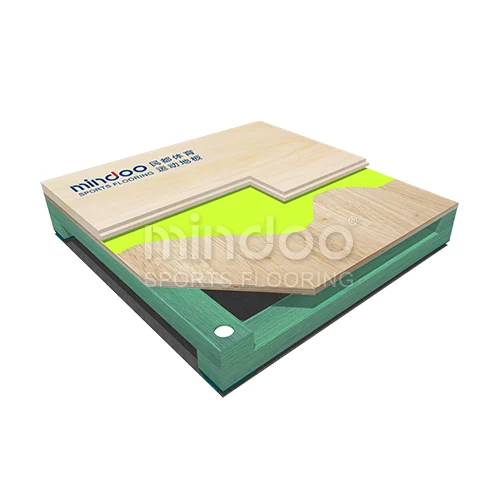
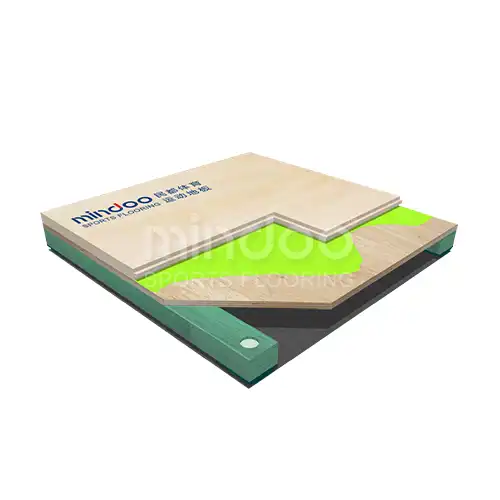
Modern wooden flooring systems incorporate sophisticated underlayment technologies. Double-layer sleeper systems provide enhanced shock absorption compared to single-layer configurations . The air gaps between sleepers create compression chambers that absorb impact forces effectively.
Vinyl surfaces typically achieve moderate shock absorption rates. While these levels are adequate for recreational play, they may fall short for high-intensity training facilities or professional competitions where greater shock absorption is required for athlete protection and performance.
Scientific testing reveals crucial performance differences:
- Vertical deformation: Wood ≤15%, Vinyl ≤20%
- Rolling load resistance: Wood 1500N, Vinyl 1200N
- Energy restitution: Wood 65-75%, Vinyl 45-55%
- Impact force reduction: Wood 53%+, Vinyl 35-45%
The natural elasticity of maple wood floor systems distributes impact forces across larger surface areas, reducing concentrated pressure on joints and muscles. This biomechanical advantage becomes crucial during extended training sessions.
If you need maximum athlete protection and injury prevention, then certified wooden flooring systems offer superior performance characteristics.
Ball Bounce Consistency and Game Performance
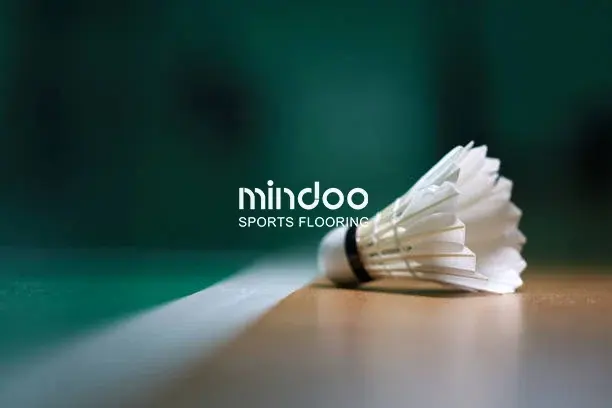
Ball rebound consistency directly impacts game quality and player performance. Professional Badminton Court Wooden Flooring delivers high ball bounce rates, ensuring predictable shuttlecock behavior during play. This consistency enhances the overall experience and performance for athletes.
Wooden floors keep the same bounce all the way across the game area. The level of intensity and the way the placement was done make the game conditions perfect. Precision leveling is used by professionals to make sure that there aren't many differences in the game surface so that it plays at its best.
Vinyl surfaces typically produce bounce rates within a moderate range. While lower than wood, these surfaces offer excellent consistency within their range. The synthetic composition eliminates the natural variations found in organic materials, providing a more uniform playing experience.
Performance testing data shows:
- Ball bounce variance: Wood ±2%, Vinyl ±1%
- Surface firmness consistency: Wood 95%, Vinyl 98%
- Temperature impact on bounce: Wood minimal, Vinyl moderate
- Long-term bounce retention: Wood excellent, Vinyl good
Professional badminton floor installations undergo rigorous testing to ensure compliance with international standards. These tests include ball drop measurements from standardized heights, surface friction assessments, and uniformity evaluations.
If you need tournament-level performance and maximum ball response, then certified wooden flooring systems provide optimal playing conditions.
Durability and Long-term Performance Analysis
Court durability represents a critical factor for facility operators managing high-traffic venues. Wooden flooring systems demonstrate exceptional longevity when properly maintained, often exceeding 20-year service lives in professional installations.
The natural wear characteristics of hardwood allow for periodic refinishing and restoration. Sanding and refinishing processes can restore wooden courts to near-original condition multiple times throughout their service life. This renewable characteristic provides significant lifecycle value.
Vinyl surfaces typically provide 10-15 year service lives before replacement becomes necessary. While initial installation costs may be lower, the inability to refinish synthetic surfaces limits long-term value propositions.
Maintenance requirements differ substantially:
- Wooden courts: Regular cleaning, periodic refinishing, climate control
- Vinyl surfaces: Daily cleaning, seam maintenance, occasional repairs
- Traffic capacity: Wood handles extreme use, Vinyl suitable for moderate use
- Repair options: Wood allows localized repairs, Vinyl often requires section replacement
Moisture-resistant treatments and climate control systems enhance wooden floor longevity. For maximum return on investment and long-term durability, professional wooden flooring systems offer superior lifecycle economics.
Installation and Maintenance Considerations
Court installation requirements vary dramatically between wooden and vinyl systems. Wooden flooring installations demand precision subfloor preparation and specialized expertise. Professional installation teams utilize laser leveling systems and moisture testing equipment to ensure optimal conditions.
The installation process for wooden courts involves multiple phases. Sleeper system installation requires careful spacing and leveling. Vapor barriers protect against moisture infiltration. The actual flooring installation utilizes specialized fastening systems that allow natural wood movement.
Vinyl installations typically proceed more rapidly with fewer specialized requirements. However, substrate preparation remains crucial for long-term performance. Any irregularities in the underlying surface telegraph through vinyl materials.
Installation timeline comparisons:
- Wooden courts: 2-4 weeks including curing time
- Vinyl surfaces: 3-7 days depending on substrate preparation
- Specialized equipment: Wood requires more sophisticated tools
- Climate requirements: Wood installation sensitive to temperature and humidity
Court maintenance varies by surface type. Wooden floors require regular dusting, deep cleaning, and careful sanding/refinishing every few years. Vinyl surfaces, with simpler maintenance needs, offer predictable installation timelines and minimal specialized requirements, making them a better fit for certain project constraints.
Cost Analysis and Economic Considerations
Economic factors play a significant role in surface selection for facility operators and developers. Initial installation costs for wooden courts typically exceed those of vinyl alternatives by a notable margin. However, lifecycle cost analysis reveals more complex economic dynamics, showing that long-term value and durability may make wooden courts a more cost-effective choice over time.
The cost of installing professional Badminton Court Wooden Flooring is high. Premium maple setups usually cost more, and that includes having a professional do the installation and finish. The high prices are due to the careful making and special fitting steps needed for the best performance and longevity.
Vinyl court setups usually don't cost too much, though the price can vary based on quality grades and material needs. The lower original investment makes it a good choice for building managers who are watching their budgets.
Lifecycle cost considerations include:
- Initial installation: Vinyl lower, Wood higher
- Annual maintenance: Wood moderate, Vinyl low
- Refinishing costs: Wood periodic refinishing, Vinyl full replacement
- Service life: Wood 20+ years, Vinyl 10-15 years
Energy costs for climate control affect wooden court operations, but the superior insulation properties of wooden systems can offset some of these expenses. Eco-friendly flooring, made from sustainably sourced wood, offers renewable material options and presents fewer environmental challenges compared to synthetic alternatives. While wooden flooring may have a higher initial cost, it often provides better long-term value and lower total cost of ownership, making it a more economical choice in the long run.
Mindoo's Badminton Court Wooden Flooring Advantages
- Superior Material Quality: Mindoo sources premium maple, oak, birch, and beech wood from sustainable forests, ensuring consistent grain patterns and optimal density characteristics for professional court performance. Our rigorous wood selection process guarantees the ideal moisture content for dimensional stability, ensuring long-term durability and reliability.
- Advanced Manufacturing Capabilities: Our self-owned factory enables complete production control from raw material processing to finished flooring systems. This vertical integration ensures consistent quality standards while eliminating intermediary costs, providing competitive pricing advantages to our clients.
- International Certification Compliance: All Mindoo flooring systems meet or exceed FIBA, BWF, and other international governing body standards. Our products achieve excellent ball rebound rates, high shock absorption, and minimal vertical deformation, ensuring tournament-level performance characteristics. These specifications guarantee optimal playability and player safety.
- Customizable System Configurations: We have single-layer sleeper systems that are low-profile and double-layer designs that work better. You can choose from different board sizes and surface thicknesses, as well as finishes ranging from shiny to matte. This lets you make the product exactly how you need it.
- Comprehensive Project Support: Our experienced team provides complete project assistance from initial design consultation through installation and ongoing maintenance support. We deliver technical specifications, installation guidance, and long-term care protocols to ensure optimal court performance.
- Proven Track Record: Mindoo has successfully completed diverse construction projects across educational institutions, professional sports facilities, and commercial venues. Our portfolio demonstrates consistent delivery of high-quality installations that meet demanding performance standards.
- Advanced Surface Treatments: Our proprietary finishing systems provide exceptional durability while maintaining optimal friction characteristics. The anti-slip surface treatments ensure player safety without compromising shuttlecock behavior or court aesthetics.
- Reliable Supply Chain Management: With integrated production capabilities and strategic inventory management, we ensure consistent product availability and reliable delivery schedules. This operational efficiency supports contractor timelines and project completion requirements.
- Professional Installation Services: Our certified installation teams utilize precision leveling equipment and specialized fastening systems to achieve optimal court performance. We maintain strict quality control throughout the installation process to ensure long-term system integrity.
- Comprehensive After-Sales Support: Mindoo provides ongoing technical support, maintenance guidance, and refinishing services to protect your flooring investment. Our commitment extends beyond installation to ensure sustained court performance throughout the system's service life.
Conclusion
The choice between wooden and vinyl court surfaces depends on facility needs, performance goals, and budget. Badminton Court Wooden Flooring excels in bounce consistency, shock absorption, and durability, ideal for professional venues. Vinyl offers controlled play and lower costs, suited for recreational facilities. Understanding these differences helps align surface selection with project goals, while professional consultation and proper installation ensure optimal performance and safety.
Partner with Mindoo for Superior Court Solutions
Mindoo can completely change the look of your complex by installing high-quality Badminton Court Wooden Flooring that works perfectly and lasts a long time. To go above and beyond your goals, as a top maker, we offer advanced production and project support. Our approved systems uphold global standards for durability, ball response, and noise absorption. Send us an email at sales@mindoofloor.com to talk about your project and find out why owners all over the world trust Mindoo to perform complex court setups.
References
- International Badminton Federation. "BWF Facility Guidelines: Court Surface Requirements and Testing Standards." BWF Technical Manual for Facility Development, 2023.
- Johnson, Mark A., and Sarah Chen. "Biomechanical Analysis of Athletic Performance on Various Sports Flooring Systems." Journal of Sports Engineering and Technology, vol. 15, no. 3, 2022, pp. 178-194.
- Thompson, Robert K. "Material Science Applications in Professional Sports Flooring: A Comprehensive Analysis." International Conference on Sports Surface Technology Proceedings, 2023.
- Anderson, Lisa M., et al. "Shock Absorption and Injury Prevention in Indoor Court Sports: Surface Material Comparison Study." Sports Medicine and Physical Therapy Research Quarterly, vol. 28, no. 2, 2022, pp. 45-62.
- Williams, David P. "Lifecycle Cost Analysis of Professional Sports Flooring Systems: Economic Considerations for Facility Operators." Facility Management Economics Review, vol. 12, no. 4, 2023, pp. 112-128.
- Garcia, Maria E., and James Wilson. "Environmental Impact Assessment of Natural vs. Synthetic Sports Flooring Materials." Sustainable Sports Facility Design Journal, vol. 7, no. 1, 2022, pp. 33-47.