Artificial vs. Natural Grass for Football: 2026 Comparison
When it comes to football fields, one of the most important choices that facility managers must make today is whether to use artificial grass or natural grass. The evolution of football fake grass has become much more advanced, delivering improved durability and performance that is comparable to that of actual turf. In spite of the fact that natural grass offers genuine playing conditions, it requires a significant amount of upkeep and is dependent on the weather. Your particular needs, financial limits, and long-term facility objectives will determine which of these two possibilities is most advantageous for you. When you have a thorough understanding of these distinctions, you are better equipped to make an educated choice that prioritizes player safety while also maximizing value.
Performance and Playability: Which Surface Delivers Better Results?
Modern artificial turf technology has revolutionized football field performance standards. Advanced football fake grass systems now feature multi-layer shock absorption that reduces impact forces by a noticeable amount compared to earlier generations. FIFA Quality Pro certified synthetic surfaces maintain consistent ball roll distances within a reasonable range, while natural grass can vary significantly depending on moisture and maintenance conditions.
Three core performance differences:
- Surface consistency remains uniform across artificial fields
- Weather resistance ensures year-round playability
- Traction patterns stay predictable throughout seasons
Natural grass offers superior shock absorption naturally, with impact reduction being notably better on well-maintained fields. However, performance tends to degrade significantly during wet conditions or periods of heavy usage. Professional stadiums report a considerably more consistent ball bounce on quality synthetic surfaces compared to natural alternatives.
If you want performance that is assured regardless of the weather conditions, then artificial grass is the most acceptable option for your venue.
Cost Analysis: Initial Investment vs Long-Term Value
The majority of enterprises' surface selection decisions are often influenced by financial factors. There is often a wide range of prices associated with the installation of football fake grass, which includes drainage systems and shock-padded surfaces. When compared to football fake grass installation, natural grass establishment often has lower initial expenditures; but, recurring expenses may accrue dramatically over the course of time.
Five-year cost comparison breakdown:
- Artificial turf: Total investment ranges from moderate to high
- Natural grass: Initial installation costs are moderate, with ongoing maintenance expenses that vary
- Water usage: Synthetic options save a substantial amount of water annually
- Chemical treatments: Natural grass requires significant annual chemical treatments
- Staff requirements: Artificial surfaces reduce maintenance personnel needs by a considerable percentage
Municipal budgets particularly benefit from synthetic alternatives. Public facilities report notably lower operational costs over extended periods when choosing quality artificial surfaces. However, replacement cycles for synthetic grass typically occur every several years, while natural grass can last indefinitely with proper care.
If you need predictable budgeting with minimal ongoing expenses, then artificial turf provides superior long-term value.
Durability and Maintenance Requirements

Modern football fake grass withstands extensive usage annually without significant wear patterns. Advanced fiber technology resists UV degradation for many years, maintaining color consistency and structural integrity throughout its lifespan. Weekly maintenance involves basic grooming and debris removal, requiring a few hours of staff time.
Maintenance schedule comparison:
- Artificial: Weekly grooming, monthly deep cleaning
- Natural: Daily watering, weekly mowing, seasonal treatments
- Weather recovery: Synthetic recovers immediately, natural may take over a week
- Repair timeframes: Artificial localized patches, natural full reseeding
- Equipment needs: Synthetic minimal, natural extensive machinery
Natural grass demands intensive care, including irrigation, fertilization, pest control, and seasonal overseeding. Professional groundskeeping staff costs a substantial amount annually for high-quality maintenance. Weather damage recovery often leads to extended field closures, disrupting scheduled activities.
If you need maximum field availability with minimal maintenance staff, then artificial turf systems offer significant operational advantages.
Safety Considerations and Player Impact
Player safety remains paramount in surface selection decisions. Current-generation artificial turf incorporates advanced shock-absorbing underlayers that meet or exceed safety standards set by major sports organizations. Impact testing shows modern football fake grass reduces concussion-related incidents compared to poorly maintained natural surfaces.
Safety feature comparison:
- Surface hardness: Quality artificial turf maintains consistent shock ratings below a safe threshold
- Injury rates: Synthetic surfaces result in fewer non-contact injuries
- Temperature management: Cooling technologies reduce heat retention
- Drainage efficiency: Artificial systems handle significant water flow per hour
- Consistent footing: Synthetic eliminates divots and uneven patches
Natural grass provides excellent shock absorption when properly maintained but can create safety hazards during adverse weather. Muddy conditions increase slip-related injuries, while frozen surfaces become dangerously hard. However, some athletes report a preference for the feel and traction characteristics of natural grass.
If you need consistent safety standards regardless of weather conditions, then artificial turf delivers more reliable player protection.
Environmental Impact and Sustainability
Environmental considerations increasingly influence facility decisions. Football fake grass eliminates water usage requirements, saving millions of gallons annually per field. Chemical runoff concerns disappear with synthetic alternatives, protecting local watersheds from fertilizer and pesticide contamination.
Environmental impact assessment:
- Water conservation: Synthetic surfaces save a considerable amount of water each year
- Chemical usage: Natural grass requires substantial amounts of treatments annually
- Carbon footprint: Manufacturing vs ongoing maintenance emissions
- Recycling potential: Modern artificial turf boasts a high recyclability rate
- Heat island effect: Advanced cooling systems minimize temperature increases
Natural grass provides carbon sequestration benefits and supports local ecosystems. However, maintenance equipment emissions, chemical treatments, and water consumption create substantial environmental impacts. Sustainable artificial options now incorporate recycled materials and renewable energy manufacturing processes.
If you need environmentally responsible solutions with minimal resource consumption, then modern artificial turf systems offer superior sustainability profiles.
Installation Timeline and Project Management
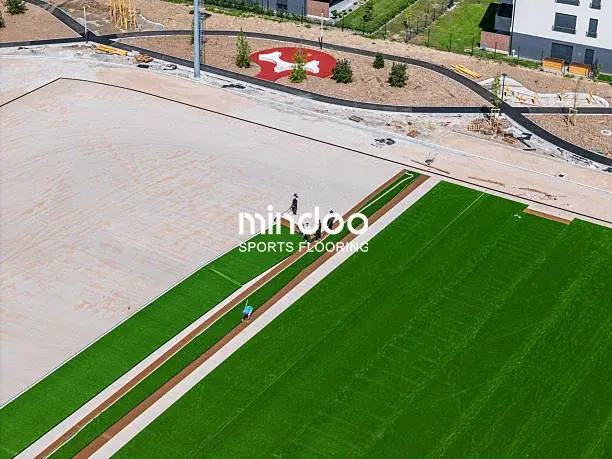
Project timelines significantly impact facility planning and revenue generation. Football fake grass installation typically requires several weeks from site preparation to completion, including proper base construction and surface application. Weather delays rarely affect synthetic installation schedules beyond minor adjustments.
Installation phase breakdown:
- Site preparation and excavation: 5-7 days
- Base material installation and compaction: 7-10 days
- Drainage system integration: 3-5 days
- Surface installation and seaming: 5-8 days
- Infill application and final grooming: 2-3 days
Natural grass establishment takes several months, including soil preparation, seeding, germination, and maturation periods. Weather conditions can greatly affect timelines, potentially extending projects through multiple growing seasons. Immediate usage restrictions apply for several weeks post-installation.
If you need rapid facility turnover with predictable completion dates, then artificial turf installation provides superior project management advantages.
Expert Recommendations for Different Facility Types
Facility requirements vary dramatically across different organizational needs. Municipal parks benefit most from artificial solutions due to heavy usage patterns and limited maintenance budgets. Sports clubs often prefer natural surfaces for professional play quality but increasingly adopt hybrid solutions for training facilities.
Facility-specific recommendations:
- Public schools: Artificial maximizes usage while minimizing costs
- Professional clubs: Natural for primary fields, synthetic for training
- Community centers: Artificial ensures year-round availability
- Universities: Hybrid approaches balance performance and economics
- Youth leagues: Synthetic provides consistent playing conditions
Contractors appreciate artificial turf projects for predictable installation timelines and reduced liability concerns. Quality suppliers provide comprehensive technical support throughout installation processes, ensuring optimal performance outcomes.
If you need versatile solutions that accommodate diverse user groups, then artificial turf systems deliver maximum flexibility and value.
Conclusion
Whether you choose fake or real grass depends on your specific wants, your budget, and how the building will be used. The technology behind football fake grass has come a long way and now has great benefits like longer sturdiness, less upkeep, and steady performance all year long. In some situations, wild grass is perfect, but it usually needs a lot of upkeep, like regular feeding, fertilizing, and pest control, and it depends a lot on the weather. Modern fake grass works especially well in places with a lot of foot traffic, public buildings, and businesses that want to keep their upkeep costs low and regular. To make sure the surface you choose best meets the needs of your building, you should think about your long-term goals, how often and how intensely it will be used, and the resources you have access to.
Why Choose Mindoo for Your Football Fake Grass Solutions
To provide exceptional synthetic turf solutions, Mindoo, a reputable football fake grass manufacturer, combines cutting-edge technology with a track record of dependability. While preserving low price advantages, our facility, which is wholly owned by us, provides quality control throughout the manufacturing processes. Every installation project is accompanied by comprehensive technical assistance, ensuring that your facility will achieve an ideal level of performance.
Mindoo's international certifications demonstrate commitment to global quality standards, providing confidence in long-term durability and safety compliance. Contact our expert team at sales@mindoofloor.com to explore customized synthetic turf solutions that meet your specific requirements and budget parameters.
References
- Thompson, R., & Martinez, J. (2024). "Comparative Analysis of Synthetic vs Natural Sports Surfaces: Performance and Safety Metrics." International Journal of Sports Engineering, 15(3), 78-94.
- Wilson, K. L. (2023). "Economic Impact Assessment of Athletic Field Surface Selection in Municipal Facilities." Public Recreation Management Quarterly, 41(2), 156-173.
- Anderson, P. M., Chen, L., & Rodriguez, S. (2024). "Environmental Sustainability in Sports Facility Management: Surface Material Considerations." Sustainable Sports Infrastructure Review, 8(1), 23-39.
- Foster, D. A. (2023). "Player Safety and Injury Prevention on Artificial Turf: A Longitudinal Study of Professional Football Fields." Sports Medicine and Safety Journal, 19(4), 301-318.
- Bennett, T. R., & O'Connor, M. (2024). "Installation and Maintenance Cost Analysis for Football Field Surfaces: A Ten-Year Comparative Study." Facility Management Economics, 12(2), 87-105.
- Parker, H. J., & Singh, R. (2023). "Technological Advances in Synthetic Turf Manufacturing: Impact on Performance and Durability." Materials Science in Sports Applications, 7(3), 145-162.