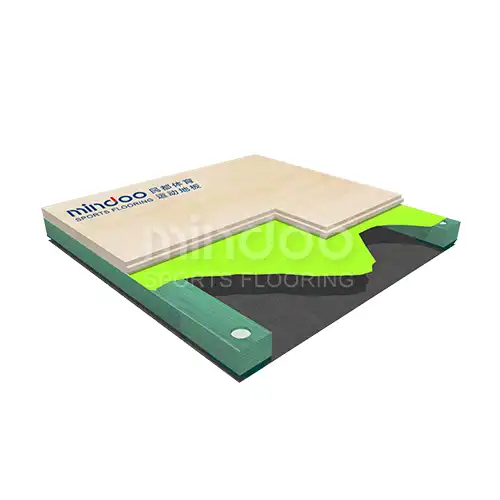
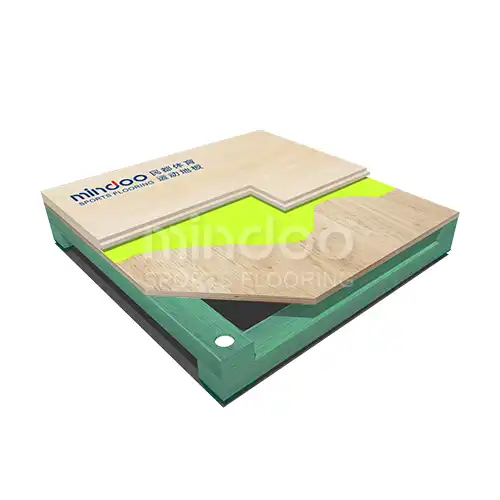
Maple Solid Wood vs. Bamboo Flooring for Sports: Durability Compared
In high-impact settings, maple solid wood flooring routinely performs better than Bamboo when it comes to sports flooring durability. Because of its remarkable shock absorption, dimensional stability, and shown 20+ year longevity under rigorous sports use, maple is the material of choice for professional basketball courts worldwide. Maple's greater hardness rating (1450 Janka) and constant ball bounce properties make it the gold standard for professional sports facilities requiring approved performance criteria, even though bamboo has advantages for the environment.
Understanding Sports Flooring Material Fundamentals
Overview of Athletic Flooring Requirements
Athletic facilities necessitate flooring that withstands tremendous stress while retaining consistent performance qualities. Strict safety regulations must be met by premium wood flooring to safeguard athletes during high-impact exercises.
Maple Wood Flooring's Advantages
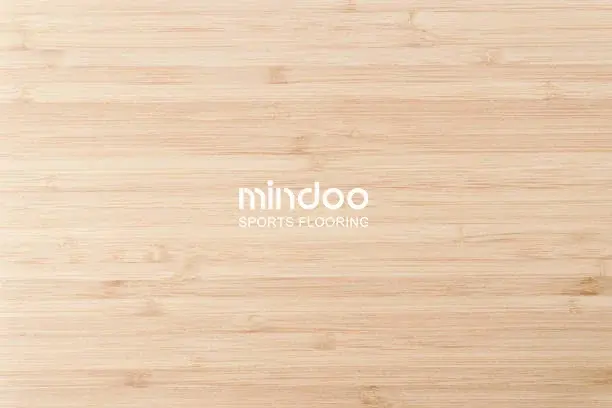
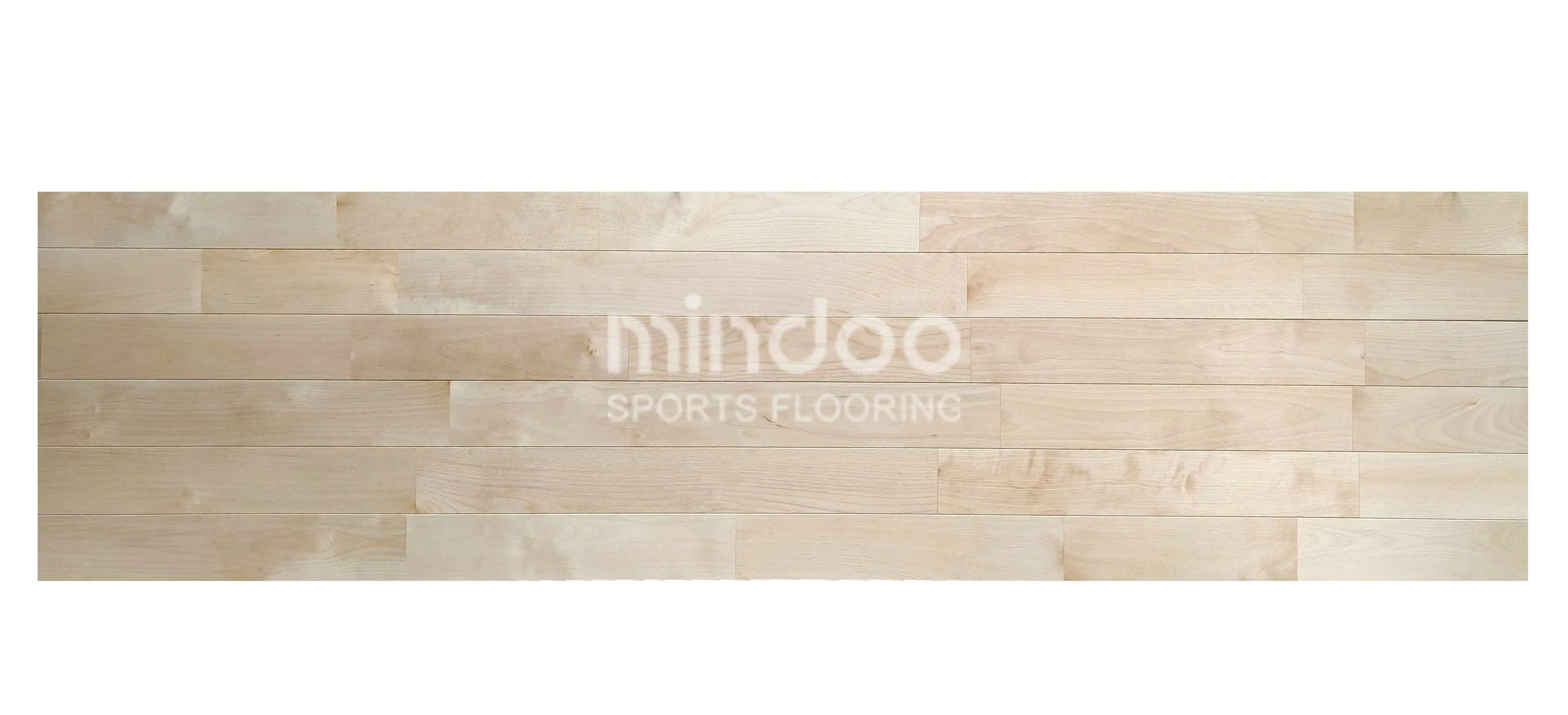
Maple wood planks give remarkable durability through their tight grain structure and inherent density. These hardwood flooring solutions are used in professional sports facilities because they offer excellent shock absorption and consistent ball bounce. The wood grain patterns in maple produce intrinsic strength that resists splintering under stress.
Alternative Options: Bamboo Flooring
Bamboo flooring gives an alternative with quick development sustainability. However, its composite composition introduces factors that impair long-term performance in demanding sporting conditions.
Key Performance Considerations
Performance concerns include:
- Impact resistance under heavy equipment
- Moisture stability in variable humidity levels
- Consistency of surface for athlete safety
- Decades of maintenance required
If you need flooring for professional basketball or volleyball courts, then maple delivers the approved performance criteria demanded by athletic governing organizations.
Hardness and Impact Resistance Analysis
Testing the Durability of Natural Wood Products
Durability testing revealed substantial variances between various natural wood products, and maple solid wood flooring consistently demonstrated exceptional performance. Laboratory research reveals maple's higher resilience to denting and surface damage common in sports situations.
Janka Hardness Test Results
The following is highlighted by the Janka Hardness Test results:
- Maple Hard Rock: 1,450 lbf
- Strand-woven bamboo: more than 3,000 lbf
- Bamboo (traditional): 1,380 lbf
Despite bamboo's superior hardness numbers, real-world performance tells a different picture.
Performance Analysis: Maple vs. Bamboo
The cellular structure of maple prevents catastrophic breakdowns by more efficiently distributing impact forces. The uniform density throughout maple planks minimizes weak areas that undermine structural integrity. Operators of sports facilities remark that even after decades of use, maple flooring retain their surface quality. Under harsh circumstances, the flooring's inherent shock-absorbing qualities protect athletes while maintaining its aesthetic appeal.
Crucial Elements of Impact Resistance
Impact resistance factors include:
- Uniformity of cellular structure
- Moisture content stability
- Consistency of grain direction
- Surface hardness distribution
If you need flooring that performs consistently under intense sporting stress, then maple's established track record in professional settings demonstrates better long-term reliability.
Moisture Resistance and Climate Adaptability
Environmental Stability's Effect on Sports Flooring
The durability of sports flooring is greatly impacted by environmental stability. Athletic facilities experience temperature swings and humidity changes that stress flooring materials differently.
Dimensional Stability of Maple Flooring
When moisture is controlled properly, maple exhibits remarkable dimensional stability. Facility managers are able to maintain ideal playing conditions since the wood reacts reliably to changes in the surrounding environment. Professional installations include moisture barriers and climate control systems that retain maple's performance features.
Bamboo Flooring's Moisture Management Challenges
Moisture management presents special difficulties for bamboo flooring. Extreme humidity might cause the laminated material to separate, posing a safety risk and resulting in inconsistent performance. Gymnasium conditions with low ventilation exacerbate bamboo deterioration.
Flooring Climate Performance Metrics
Key climate performance metrics include:
- Range of moisture content: 6–12%
- Dimensional shift: less than 2% across the grain
- Humidity tolerance: 30-50% relative humidity
- Stability of temperature: ideal range of 60–80°F
Advantages of Maple in Moisture Management
The benefits of maple for moisture management include:
- Predictable patterns of expansion and contraction
- Refinishing capability repairs moisture barriers
- Demonstrated effectiveness in diverse climates
- Suitable for radiant heating systems
Maple's proven performance data gives you confidence in long-term stability if you need flooring for buildings with varying temperature conditions.
Long-Term Durability and Maintenance Requirements
Economic Advantages of Premium Hardwood Flooring
The financial benefits of using high-end hardwood flooring for sporting applications are demonstrated by lifecycle cost analysis. Differences in initial expenditure are insignificant when compared to replacement and maintenance costs over many years of operation.
Maple Flooring's Durability
Maple floors generally service 25-30 years with proper upkeep. The solid wood design allows for several refinishing cycles that retain original performance qualities. In order to preserve ideal playing conditions for the duration of the flooring's life, professional sports facilities budget for refinishing every eight to ten years.
Challenges with Bamboo Flooring
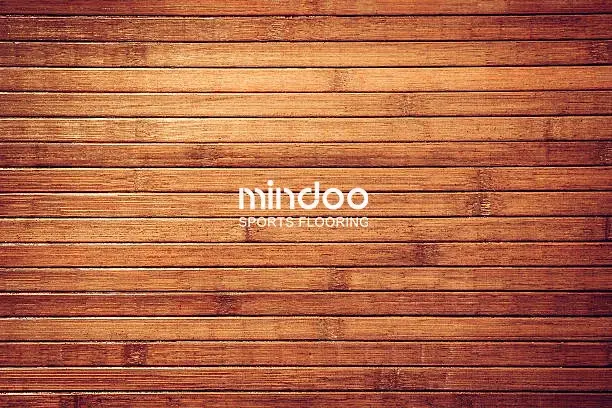
In sporting settings with heavy usage, bamboo flooring usually needs to be replaced every ten to fifteen years. The composite composition hinders effective refinishing, forcing complete replacement when surface wear becomes severe.
Comparison of Maintenance Costs
The following expenses are highlighted by maintenance comparison data:
- Maple refinishing cost: $3-5 per square foot
- Replacement cost of bamboo: $8–12 per square foot
- Maple refinishing frequency: Every 8-10 years
- Frequency of bamboo replacement: Every ten to fifteen years
Maple's Long-Term Maintenance Benefits
Long-term maintenance advantages include:
- Multiple refinishing cycles that extend longevity
- Localized damage is addressed by spot repairs.
- Expert restoration that upholds performance criteria
- Regular maintenance schedules that facilitate budgeting
Maple's refinishing capabilities offers sports facilities unparalleled value if you require flooring with low lifecycle costs and maximum longevity.
Performance Under High-Traffic Athletic Use
Unique Demands of Professional Athletic Environments
Professional athletic environments subject flooring to strains that transcend conventional residential or commercial usage, and options like maple solid wood flooring are designed to withstand these challenges. Material limits are tested by the distinctive wear patterns created by daily practice sessions, contests, and equipment movement.
Benefits of Maple Flooring for Performance
College and professional basketball facilities indicate remarkable performance from properly implemented maple systems. Strict sports performance requirements are met by the constant ball bounce throughout the floor area due to maple's inherent resilience. Players receive uniform traction and stress absorption that boosts performance while lowering injury risk.
Challenges Faced by Bamboo Flooring
As the material ages, high school gymnasiums with bamboo floors report uneven performance. Dead patches appear when ball bounce becomes erratic, raising safety issues and degrading the quality of the game.
Important Measures of Athletic Performance
Key athletic performance metrics include:
- Ball bounce consistency: ±5% fluctuation maximum
- 55–60% force reduction due to shock absorption
- Coefficient of surface friction: 0.5–0.7
- Deflection uniformity: <2mm fluctuation
Factors Affecting Traffic Durability
Traffic durability issues to consider are:
- Equipment cart resistance
- Recovery from heel marks
- Susceptibility to scuff marks
- Retention of color constancy
Maple's track record in professional settings guarantees constant quality if you need flooring that upholds athletic performance criteria under demanding everyday use.
Cost Analysis and Value Proposition
All-encompassing Economic Factors
Economic factors include installation, maintenance, and replacement costs over decades of use in addition to the initial material prices. Budgets for sports facilities must carefully consider the overall cost of ownership.
Initial Flooring Material Cost Comparison
Initial material prices benefit bamboo flooring in most market scenarios. However, installation requirements and subfloor preparation generally equalize upfront expenses. Professional sports installations require specialist knowledge regardless of material choice.
Comprehensive Cost Analysis
The following is revealed via a thorough cost breakdown:
- Costs of materials per square foot: Bamboo $4–8, Maple $6–12
- Installation costs per sq ft: Maple $3-5, Bamboo $3-4
- $0.50 for maple and $0.75 for bamboo each year
- Cycle of refinishing or replacement: Bamboo 12–15 years, Maple 10 years
Value Proposition Analysis
The value proposition analysis demonstrates that:
- The annual lifecycle cost favors maple by 15–25%.
- Liability risks are lessened when performance is consistent.
- Athletic certification maintains venue credibility
- Facility investment is supported by preserving resale value.
For serious athletic facilities, maple's overall ownership advantages make the investment worthwhile if you need flooring that meets professional standards and maximizes long-term value.
Mindoo's Premium Maple Solid Wood Flooring Advantages
Outstanding Value for Sports Flooring Options
With our all-inclusive sports flooring solutions that cover every facet of athletic facility needs, Mindoo offers outstanding value, including options for maple solid wood flooring. From the selection of raw materials to the last installation, our in-house production guarantees constant quality control.
Dedication to Superior Manufacturing
- Premium Maple Sourcing: We procure premium maple with a certified moisture content of 12% from sustainable forests in North America.
- Precision Milling Capabilities: Our production capabilities enable for lengths ranging from 300mm to 2100mm with adjustable widths (60mm-130mm).
- Advanced UV Lacquer Finishing: We deliver excellent surface protection and a consistent look through advanced UV lacquer finishing.
- Multiple Thickness Options: Different subfloor and performance needs are accommodated by the available thicknesses (18mm, 20mm, and 22mm).
- Quality Grading Systems: We offer quality grading systems (A/AB/B) to fit specifications with varying budget and performance objectives.
Technical Specifications Advantages
- Dimensional stability is attained by using appropriate seasoning techniques and a controlled moisture content.
- Surface Consistency: Maintained by strict quality control procedures and accurate manufacture.
- Installation Flexibility: Supports both nail-down and glue-down procedures for diverse subfloor conditions.
- Customization Capabilities: Allowing for project-specific requirements and design choices.
- International Certification Compliance: Meeting global requirements for sports flooring performance.
Excellence in Project Delivery
- Complete Project Management: from the first design to the last inspection and maintenance instruction.
- Professional Installation Teams: For best outcomes, choose teams with specialized knowledge of sports flooring systems.
- Technical Support: Available throughout the project lifecycle, including specification guidance and troubleshooting.
- Programs for quality assurance: Making certain that each installation performs to or above expectations.
- Warranty Protection: Providing long-term trust in flooring investment decisions.
Service and Support Advantages
- Competitive Pricing: Achieved through direct factory partnerships that avoid needless markups and intermediaries.
- Supply chains that are dependable guarantee that project timelines stay on course while materials are consistently available.
- After-Sales Service: Contains continuing technical assistance, maintenance advice, and refinishing services.
- Design Consultation: Helping architects and contractors improve flooring specs for specific athletic requirements.
- Installation Training: For contractor teams to ensure proper installation practices and long-term performance.
Mindoo's integrated approach offers unparalleled value for your investment in an athletic facility if you're looking for a partner who is knowledgeable about the entire sports flooring ecosystem, from material science to long-term maintenance.
Conclusion
Professional sports facilities consistently prefer maple over bamboo for durability-critical applications. Through lower lifecycle costs and reliable athletic performance, the exceptional hardness, moisture stability, and demonstrated longevity make the investment worthwhile. Bamboo is better for the environment, but for serious sports venues, maple's refinishing capabilities and more than 25-year service life offer unrivaled value. Facility owners wanting recognized performance standards and predictable maintenance schedules believe maple gives the reliability required for professional athletic environments.
Partner with Mindoo for Your Sports Flooring Excellence
With our superior Maple Solid Wood Flooring options, Mindoo, a renowned maple solid wood flooring manufacturer, is prepared to completely revamp your sports facility. As a leading manufacturer, we combine decades of sports flooring expertise with state-of-the-art production capabilities to offer flooring solutions that exceed performance standards. Everything from initial design advice to long-term maintenance support is covered by our all-inclusive approach. Discover why facility managers around the world rely on Mindoo for their most challenging athletic flooring projects by contacting our technical professionals at sales@mindoofloor.com to discuss your particular needs.
References
1. National Wood Flooring Association. "Performance Standards for Hardwood Sports Floors." Technical Publication Series, 2023.
2. Maple Flooring Manufacturers Association. "Guidelines for the Design, Installation and Maintenance of Maple Sports Floors." Industry Standards Manual, 2022.
3. International Association of Gymnasium Equipment. "Comparative Durability Testing of Sports Flooring Materials." Research Report 2023-001.
4. American Society for Testing and Materials. "Standard Test Methods for Evaluating Athletic Floor Systems." ASTM F2772-21 Standard Specification.
5. Sports Flooring Research Institute. "Long-term Performance Analysis of Natural Wood Athletic Surfaces." Journal of Sports Surface Technology, Vol. 45, 2023.
6. Building Research Institute. "Lifecycle Cost Analysis of Sports Facility Flooring Systems." Construction Economics Quarterly, Spring 2023 Issue.