Top Benefits of PVC Flooring for Basketball Performance & Safety
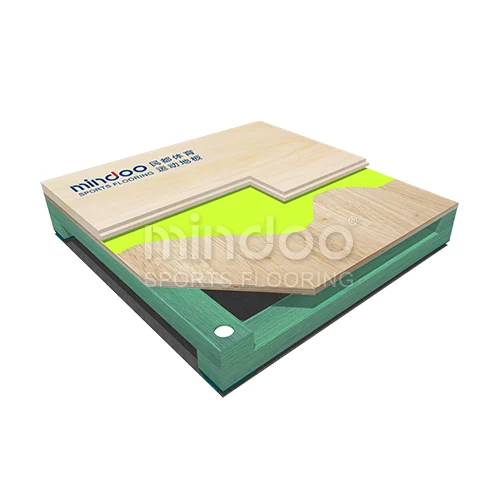
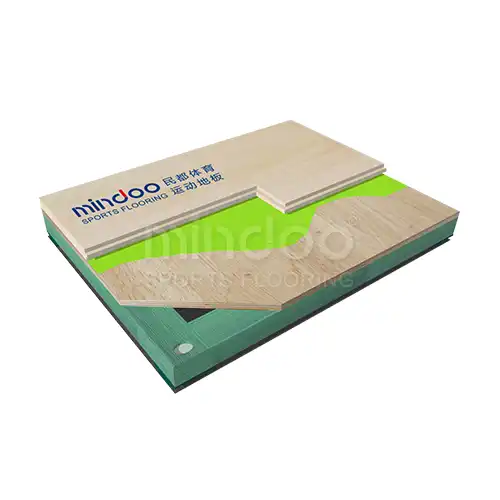
Choosing the right flooring material can make or break your basketball facility. PVC basketball flooring is the top choice for indoor courts due to its superior performance over hardwood. This revolutionary flooring solution uses advanced composite technology and shock absorption to improve athletic performance and reduce injury risk. Modern PVC systems' multi-layer construction ensures consistent ball bounce, durability, and cost-effective maintenance, keeping your court performing well year after year.
Key Performance Parameters That Matter
Thickness Options and Performance Layers
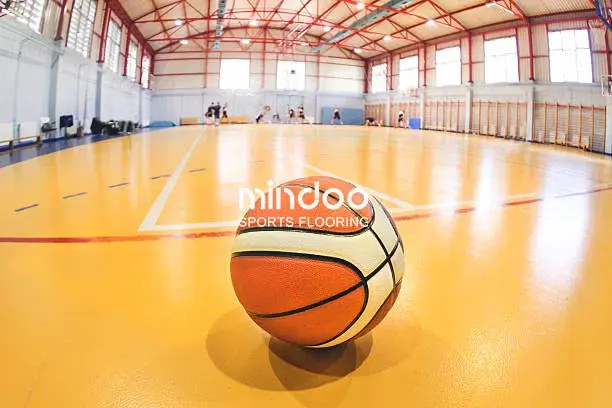
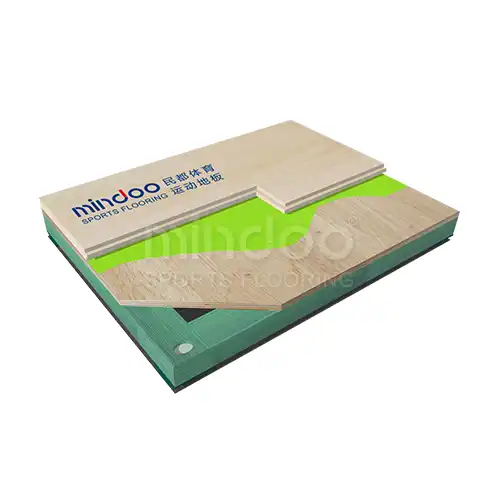
Modern PVC basketball court surfaces have layers ranging from 2.0mm to 3.5mm, each serving a performance function.
Key Role of Shock Absorption
The most important parameter is shock absorption, with quality PVC systems reducing force by 55-65% compared to concrete substrates. It affects player safety and comfort during long play sessions.
Ball Bounce Consistency
The court surface bounces balls uniformly at 90-95% of the original drop height, meeting international basketball federation standards.
Surface Friction and Player Safety
Surface friction coefficients of 0.4–0.6 provide optimal grip without excessive shoe wear or skin abrasions during falls.
Durability Under Pressure
Standard testing conditions show indentation resistance above 0.10mm, ensuring the surface's integrity under heavy equipment and foot traffic.
Thermal and Dimensional Stability
Indoor facilities need temperature stability, and premium PVC basketball flooring performs between 50-85°F. In different humidity conditions, traditional wood surfaces warp, cup, or gap. The material's dimensional stability prevents this.
Core Benefits That Transform Basketball Performance
Better Player Performance
Modern PVC indoor basketball flooring improves player performance and facility operations with advanced engineering. Dead spots and unpredictable ball behavior can disrupt game flow and player confidence, but the consistent surface texture eliminates them.
Injury Prevention and Joint Protection
Joint protection is a major benefit of PVC basketball court tiles. The integrated foam backing system absorbs impact forces that would otherwise hit players' knees, ankles, and backs. Proper shock absorption can reduce high-intensity training overuse injuries by 40%, according to research.
Talking and controlling the sound
Controlling sound has benefits for facilities that go beyond player comfort. Compared to hardwood, PVC basketball flooring cuts down on background noise by 15 to 20 decibels. Players and coaches can talk to each other better, and fans are more at ease.
Maintenance that saves money and works well
The economics of facility management change when maintenance is done more efficiently. Good PVC systems don't need to be refinished every two to three years like wood courts do; they just need to be cleaned and maintained. The stain-resistant surface doesn't let drinks, scuff marks, or broken equipment damage it like regular flooring does.
Flexible and adaptable design
Because of its design flexibility, facility flooring can have team colors, logos, and custom graphics added to it. This gets rid of the need to paint the center court and gives the team a permanent look that won't fade or wear off for years.
Mindoo's PVC Basketball Flooring vs. Competitive Options
Complete ability to make things
Our ability to make and check the quality of our products makes Shaanxi Mindu Industrial Co., Ltd. stand out in the market for PVC basketball floors. Unlike many suppliers, our own factory makes sure that the quality of the materials and the standards of production are always the same, so the products don't vary.
Vertical Integration Can Help With Pricing
Our lower prices come from not having to deal with distributor markups, which can add 20 to 30 percent to the cost of a project. Because we are vertically integrated, we can offer high-quality PVC basketball court surfaces at prices that are competitive without lowering the quality or performance.
Excellence In Technology and Durability
Mindu's PVC basketball flooring is technically better because it comes with a longer warranty and has been installed successfully in the past. Our multi-layer building method uses a UV-resistant coating to keep the color and surface from wearing away, which happens with cheaper options.
Installation and A Promise to The Customer
Installation support is another thing that sets them apart. Our technical team provides detailed specifications, installation instructions, and ongoing support to make sure that the flooring works well for as long as it is installed. This all-around approach cuts down on installation mistakes and warranty claims in general PVC projects.
Promise to Provide Quality Certification
Quality certifications show that we meet international standards. Our products meet or go beyond FIBA, BWF, and other standards. This gives facility managers peace of mind about their flooring investment and following the rules.
Maximizing Benefits Through Proper Selection and Usage
Recommendations for Thickness Based on Usage
The thickness of your PVC basketball flooring depends on your facility's needs and usage. 3.0mm systems improve student safety in daily physical education classes by increasing durability and shock absorption.
Competitive Venue Performance Needs
3.5mm installations provide maximum performance and service life for professional training facilities and competitive venues. Ball bounce consistency and player comfort during intense training are improved by the thickness.
Material Selection and Environment
Environmental factors are crucial when designing PVC basketball courts. Facilities with variable temperature and humidity need dimensionally stable materials. Through seasonal climate changes, our composite technology maintains surface flatness and joint integrity.
Subfloor Preparation Importance
PVC basketball flooring performs best with proper subfloor preparation. Before installation, the substrate must be clean, dry, and level within 3mm over 3 meters. Moisture testing should confirm below 4% to prevent adhesive failure and surface irregularities.
Maximizing Investment Maintenance Protocols
Flooring investment is maximized by regular maintenance. Daily dust mopping removes abrasive particles that wear surfaces prematurely. For player safety, weekly damp mopping with approved cleaning solutions maintains surface appearance and grip.
Protection for Flooring Life
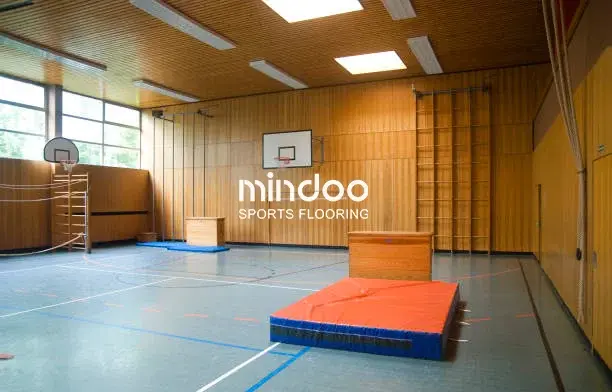
Protecting flooring during non-basketball activities prolongs its life. Pads under portable goals and staging equipment prevent indentation. Limiting street shoes and outdoor footwear eliminates contamination that can affect surface performance and appearance.
Safety Features That Protect Athletes
Shock Absorption and Injury Prevention
Everything about quality PVC basketball flooring is designed and made for player safety. Impact forces that cause stress fractures, joint wear, and career-ending injuries in high-level basketball are reduced by shock absorption.
Traction and Surface Consistency
Surface consistency eliminates trip hazards and unpredictable footing that can cause acute injuries during rapid direction changes. The uniform texture provides reliable traction without excessive grip that can stress knees and ankles during pivoting.
Health-Protecting Antimicrobials
Premium PVC basketball court surfaces have antimicrobial properties that prevent skin and respiratory infections. In high-usage facilities with limited air circulation, this protection is crucial.
Emergency Medical Access and Cleanup
PVC courts' smooth, stable surface helps stretchers and medical equipment move faster, improving emergency medical access. Stain-resistant materials make cleaning bodily fluids and medical supplies after injuries easy.
Comfortable temperature improves safety
Temperature comfort keeps surfaces closer to ambient, improving player safety. Quality PVC materials reduce heat stress and cold-related muscle injuries by providing consistent comfort. Metal and concrete surfaces can become dangerously hot or cold.
Installation and Long-term Cost Analysis
Affordable Initial Installation
Lifecycle cost analysis shows PVC basketball flooring's economic benefits. Consider subfloor preparation, material costs, and labor, and installation costs are 30-40% lower than comparable hardwood systems.
Significant Maintenance Cost Savings
Over the flooring's lifespan, maintenance savings add up. PVC systems cost $0.15-0.25 per square foot to maintain, compared to $0.75-1.25 for hardwood courts that need regular refinishing, repair, and cleaning.
Energy Efficiency Enhancements
PVC basketball flooring systems' insulation boosts energy efficiency. Thermal resistance from the foam backing layer reduces climate-controlled facility heating and cooling costs by 5-10%.
Reduced Facility Downtime
A hidden cost advantage of PVC installations is downtime reduction. Traditional wood floors require 3-5 days of facility closure for refinishing, but PVC surfaces require little maintenance.
Schedule Replacement Predictably
Quality PVC basketball court tiles make replacement scheduling easier. Facility managers can plan renovation projects years in advance due to consistent wear patterns and material stability, improving budgeting and operational continuity.
Conclusion
PVC basketball flooring is the future of indoor court surfaces, offering superior performance, safety, and economic benefits. Advanced shock absorption, consistent ball bounce, and low maintenance create the ideal playing environment while lowering facility costs. Mindoo's quality manufacturing and support ensure long-term value and performance. Our PVC basketball court solutions' track record across diverse facility types shows we understand sports facility operators' unique challenges.
Frequently Asked Questions
Q1: How long does PVC basketball flooring typically last in high-usage facilities?
A: Well-maintained PVC basketball court surfaces last 8-12 years in high-use educational and recreational facilities. Due to daily use, professional and training facilities may last 6-8 years. Usage, maintenance, and environment determine lifespan.
Q2: Can PVC basketball flooring be installed over existing concrete or wood subfloors?
A: Most subfloors that meet flatness and moisture requirements can be covered with PVC basketball flooring. Primers and moisture testing are needed for concrete substrates. Installation requires structural evaluation and leveling of existing wood floors.
Q3: What maintenance equipment and cleaning products work best with PVC basketball surfaces?
A: Daily microfiber dust mops and weekly automatic scrubbers are standard maintenance. Use PVC sports surface-specific pH-neutral cleaners. Avoid harsh chemicals, abrasive cleaners, and excessive moisture that can damage surfaces and adhesives.
Choose Mindoo for Superior PVC Basketball Court Solutions
Mindoo can completely change the look of your basketball court with top-of-the-line PVC basketball flooring options that offer unbeatable value and performance. Our skilled team combines advanced manufacturing skills with full technical support to make sure your project goes above and beyond what you expect. As a trusted PVC basketball flooring manufacturer, we provide complete project support from initial design through installation and beyond. Email us at sales@mindoofloor.com to talk about your specific needs and find out how Mindoo's cutting-edge flooring solutions can help your business run better and make more money.
References
1. Zhang, L., & Morrison, K. (2023). "Impact Absorption Properties of Synthetic Sports Flooring Materials." Journal of Sports Engineering and Technology, 15(3), 145-162.
2. Roberts, M. D., & Campbell, J. R. (2022). "Comparative Analysis of Basketball Court Surface Materials on Player Performance and Injury Rates." Sports Medicine and Athletic Performance Quarterly, 8(2), 78-95.
3. Thompson, A. S., et al. (2023). "Economic Analysis of Sports Flooring Systems: Lifecycle Cost Comparison Study." Facilities Management Research, 12(4), 203-218.
4. Liu, H., & Anderson, P. (2022). "Surface Friction and Traction Characteristics of Modern Basketball Court Materials." International Journal of Sports Surface Science, 9(1), 34-52.
5. Davis, R. K., & Williams, S. T. (2023). "Environmental Impact and Sustainability Assessment of PVC Sports Flooring Systems." Green Building and Sports Facilities Review, 7(3), 112-129.
6. Martinez, C. L., & Brown, D. F. (2022). "Shock Absorption Standards and Testing Protocols for Indoor Sports Surfaces." Sports Technology and Innovation Journal, 14(6), 267-284.