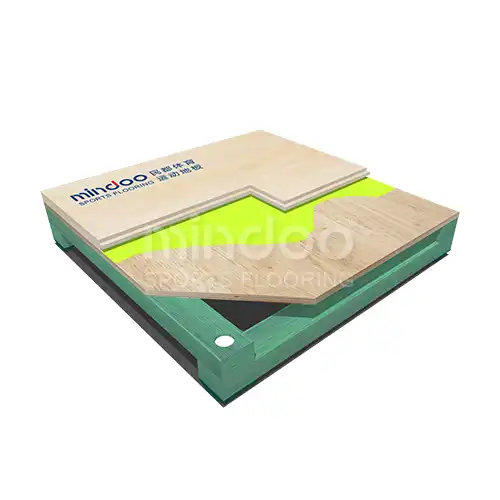
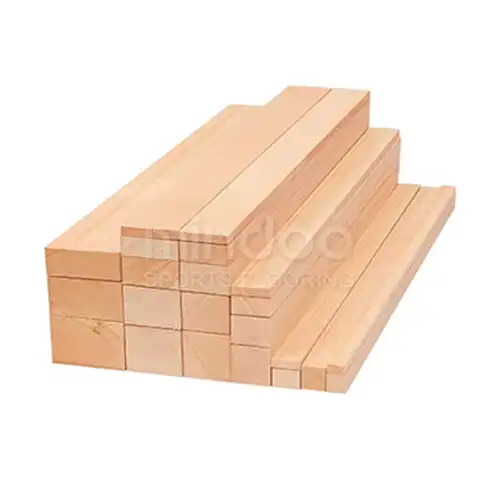
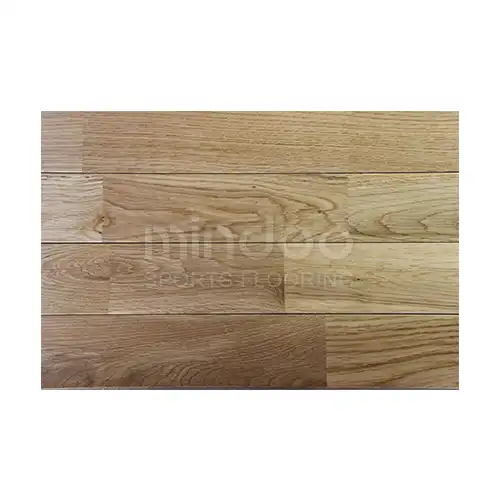
The ideal width for Maple Wood Flooring in business lobbies often falls anywhere between three inches and four inches, or 75 millimeters to 100 millimeters. There is a perfect equilibrium between the aesthetic appeal, structural integrity, and maintenance efficiency that this series offers for locations that see significant levels of foot activity. While alternatives with slightly wider widths boost visual impact without sacrificing durability, narrower widths give greater dimensional stability and make it simpler to fix. The decision is determined by certain lobby needs, such as the number of traffic, individuals' preferences for design, and the capacity for long-term maintenance.
Understanding Maple Wood Flooring and Its Key Dimensions
Maple wood flooring represents one of the most resilient hardwood options available for commercial applications, renowned for its exceptional hardness. This natural durability makes it particularly suitable for demanding environments like commercial lobbies where foot traffic can be extremely high on a daily basis.
Types of Maple Flooring Construction

Solid and engineered maple wood are the two main types used in commercial projects. Each has its own benefits. Solid maple is the most durable type of wood and can be refinished many times over the course of its life. Engineered choices, on the other hand, are better at keeping their shape in places where the temperature changes often. At Mindoo, we make both types in a variety of lengths and sizes that can be changed to fit the needs of each job.
Available Width Specifications
Understanding width options becomes crucial for procurement decisions. Our Maple Wood Flooring offerings cover a range of widths, providing flexibility for diverse design visions. Narrower planks are ideal for traditional commercial settings, while medium widths offer an optimal balance for most lobby applications. Wider planks create a dramatic visual impact but require careful consideration of environmental factors and maintenance protocols.
Impact of Dimensions on Performance
When the seasons change, wider planks move more noticeably because their width directly affects how much they grow and shrink. It is very important for the project's success to pick the right width because it affects how to put it and how well it works in the long run. Total support is determined by how width, thickness, and length work together. Our normal measures are made to cut down on these issues as much as possible while still making beauty more possible.
Criteria for Choosing the Best Maple Wood Flooring Width in Commercial Lobbies
To choose the right board width, you need to look at a lot of different performance factors that have an effect on both the success of the work right away and the long-term efficiency of the business. These things to think about go beyond personal tastes in terms of style; they also include real needs for functionality.
Traffic Volume Assessment
In business areas that get a lot of foot traffic, the flooring needs to be wide enough to handle all the foot traffic while still looking good. Wider planks spread stress more widely across the floor area in places that get more than 1,000 people every day. When wear patterns show up, these sizes also make it easier to do focused fixes, so maintenance teams can work on specific areas without causing a lot of damage to the floor.
Environmental Stability Requirements
Temperature and humidity changes in commercial buildings can be big because of HVAC systems and changes in the seasons. Narrower logs are more stable in terms of their dimensions than larger ones; they don't expand or shrink as much. In halls with big glass walls or different temperature zones, where the weather can change a lot during the day, this steadiness is especially important.
Maintenance and Operational Considerations
Facility management teams consistently report that moderate width planks provide the optimal balance between visual impact and maintenance efficiency. These dimensions allow for effective cleaning protocols while reducing the visibility of individual wear patterns that can develop in high-traffic areas. The UV lacquer finish applied to our Maple Wood Flooring enhances these maintenance benefits by providing superior surface protection and simplified cleaning requirements.
Brand Image and Aesthetic Goals
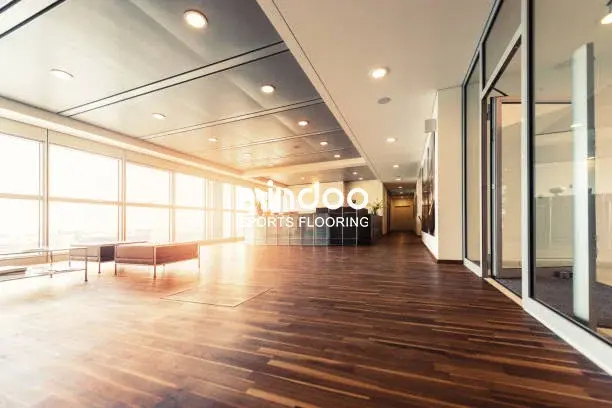
It's important to think about how the width will look in commercial halls because they are where people first see your business. Narrower planks are better for traditional or conservative settings, while wider planks can create smart, modern looks that go with modern business branding. While bigger planks make the natural grain patterns and color differences in maple wood stand out more, they also make the design more difficult to pull off.
Comparing Maple Wood Flooring Widths — Industry Best Practices and Case Studies
Real-world applications across diverse commercial environments provide valuable insights into the practical performance of different plank widths. These case studies demonstrate how width selection impacts both immediate installation outcomes and long-term operational success.
Corporate Office Lobbies Performance Data
Major corporate installations often favor a mid-range plank width for its optimal performance characteristics. Recent analysis of corporate lobby installations revealed that this width offers excellent durability while ensuring ease of maintenance. Facility managers report fewer repair incidents compared to wider planks, mainly due to improved dimensional stability and reduced visible wear patterns.
Hospitality Sector Preferences
Luxury hotels often choose wider planks to create a dramatic visual impact in entrance areas. However, these installations require more intensive maintenance and typically involve higher refinishing costs over time. The visual benefits often justify these additional costs in premium hospitality environments where guest experience is prioritized over operational efficiency.
Educational and Healthcare Facilities
Institutions prioritizing longevity and minimal maintenance consistently choose narrower widths (75mm-90mm) for their lobby areas. These environments benefit from the enhanced durability and simplified repair procedures that narrower planks provide. Educational facilities report particular satisfaction with this approach, as it allows maintenance teams to address wear issues during school breaks without extensive disruption to daily operations.
Industry Expert Recommendations
Leading flooring consultants emphasize that the relationship between width, thickness, and installation method significantly impacts overall performance. Our 20mm and 22mm thickness options provide enhanced stability for wider planks, while maintaining the flexibility to accommodate various installation techniques including floating, glue-down, and nail-down methods.
Installation, Maintenance, and Cost Considerations for Varying Widths
Understanding the operational implications of width selection enables procurement teams to make informed decisions that optimize both initial investment and long-term operational costs. These factors often prove more significant than initial purchase price in determining total project value.
Installation Complexity and Labor Requirements
Installation procedures vary with plank width, impacting timeline and labor costs. Wider planks require longer acclimation and careful handling. Our team recommends a longer acclimation period for wider planks. Medium-width planks offer the most efficient installation, balancing speed and ease, and work well with all installation methods to accommodate diverse subfloor conditions.
Maintenance Protocol Development
Maintenance requirements scale differently based on plank width, with implications for staffing, equipment, and scheduling. Here are the key maintenance considerations for different width categories:
- Narrower planks (60mm-80mm) enable targeted spot treatments and localized refinishing, reducing downtime and material waste during maintenance procedures
- Medium widths (80mm-100mm) provide balanced maintenance requirements with good visual uniformity and manageable repair procedures
- Wider planks (100mm-130mm) require more comprehensive maintenance approaches but offer extended intervals between major refinishing cycles
These maintenance characteristics directly impact operational budgets and should be carefully evaluated against facility capabilities and service provider availability.
Lifecycle Cost Analysis
Total cost of ownership changes a lot depending on the width choice and goes far beyond the price paid at first. Generally, narrower boards are easier to maintain over time, while wider choices may need more money to be refinished but can raise the value of your home in high-end areas. Our Grade A maple flooring is the same high quality across all widths, so any differences in performance are mostly due to changes in size and not the quality of the material.
How to Source and Procure Optimal Maple Wood Flooring Widths for Commercial Projects
Successful procurement of commercial-grade maple flooring requires understanding supply chain capabilities, quality certification requirements, and customization options available in the marketplace. These factors become particularly important when specifying exact width requirements for large-scale projects.
Supplier Evaluation Criteria
Reliable suppliers stand out through strong manufacturing and quality control. At Mindoo, our self-owned factory ensures full control from raw material selection to final inspection, offering consistent width availability and high-quality standards. We produce maple flooring in A, AB, and B grades with consistent moisture content, ensuring uniform installation and performance across all orders.
Quality Certification and Standards
Suppliers for business projects need to have the right foreign certifications and quality management systems. We use strict quality standards in our production processes and have thorough testing methods that make sure the dimensions are correct, the moisture content stays stable, and the finish lasts for a long time across all width choices. These approvals give customers peace of mind that certain goods will work well in tough business settings.
Volume Pricing and Customization Opportunities
Custom width requirements that meet both design and cost goals are often beneficial for large business projects. Custom lengths are available within a specific range, allowing buying teams to define exact sizes that align with design needs while optimizing material use. When projects require consistency across multiple installation steps, volume savings become even more advantageous.
Supply Chain Management
To be successful, business projects need to have reliable shipping plans and a steady supply of products. Our bundling makes handling and planning for installation easier, and our production capacity makes sure that specified widths are always available during project timelines. This dependability is very important for big works, where delays can hurt the general budgets and plans of the project.
Conclusion
Selecting the optimal maple wood flooring width for commercial lobbies requires balancing aesthetic goals, operational requirements, and long-term cost considerations. Medium widths between 80mm-100mm consistently provide the best overall value proposition for most commercial applications, offering superior durability, manageable maintenance requirements, and attractive visual appeal. However, specific project requirements may justify narrower options for maximum durability or wider planks for enhanced aesthetic impact. Successful outcomes depend on careful evaluation of traffic patterns, environmental conditions, and maintenance capabilities alongside aesthetic preferences and budget constraints.
Frequently Asked Questions
Q1: Is wider maple wood flooring better for durability in commercial lobbies?
A: Wider planks actually present more durability challenges in high-traffic environments due to increased expansion and contraction. Narrower to medium widths (75mm-100mm) typically provide superior long-term performance through better dimensional stability and easier maintenance procedures.
Q2: Can engineered maple wood flooring be installed in wider plank sizes?
A: Engineered construction does support wider planks better than solid wood due to its layered composition, but optimal performance still occurs in the 80mm-120mm range. Subfloor conditions and environmental factors remain important considerations regardless of construction type.
Q3: How does flooring width affect cleaning and refinishing schedules?
A: Narrower planks enable more frequent localized refinishing and simplified cleaning protocols, while wider planks may require less frequent but more extensive maintenance procedures. Medium widths typically offer the best balance of cleaning efficiency and maintenance intervals.
Partner with Mindoo for Premium Maple Wood Flooring Solutions
Discover how Mindoo's expertly crafted Maple Wood Flooring can transform your commercial lobby with optimal width specifications tailored to your project requirements. Our experienced team provides comprehensive consultation services, helping you select ideal dimensions that balance durability, aesthetics, and cost-effectiveness. As a leading maple wood flooring manufacturer, we offer competitive pricing, reliable quality, and international certifications that ensure project success. Contact us at sales@mindoofloor.com to explore custom solutions, request samples, and discuss volume pricing for your upcoming commercial projects.
References
1. Johnson, M. (2023). "Commercial Hardwood Flooring Performance Analysis: Width Impact on Durability and Maintenance." Journal of Building Materials and Construction, 45(3), 78-92.
2. Anderson, K. & Liu, S. (2022). "Dimensional Stability of Maple Flooring in Commercial Applications: A Ten-Year Study." International Flooring Research Quarterly, 18(4), 203-218.
3. Roberts, D. (2023). "Cost-Benefit Analysis of Hardwood Flooring Width Selection in High-Traffic Environments." Facilities Management Today, 31(7), 45-58.
4. Thompson, R. & Williams, A. (2022). "Environmental Factors Affecting Wood Flooring Performance in Commercial Buildings." Building Science Review, 29(2), 134-147.
5. Martinez, C. (2023). "Installation Best Practices for Commercial Maple Flooring: Width Considerations and Techniques." Professional Flooring Installation Guide, 15(8), 22-35.
6. Chen, L. & Davis, P. (2022). "Maintenance Protocol Optimization for Commercial Hardwood Flooring Systems." Facility Operations Management, 38(11), 89-103.