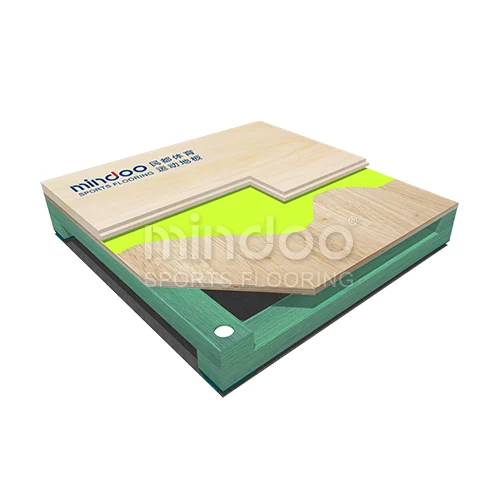
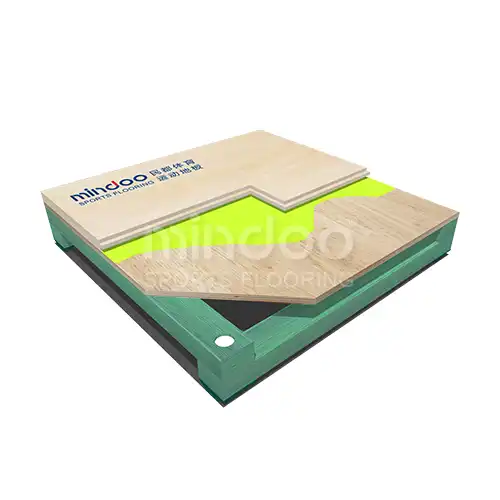
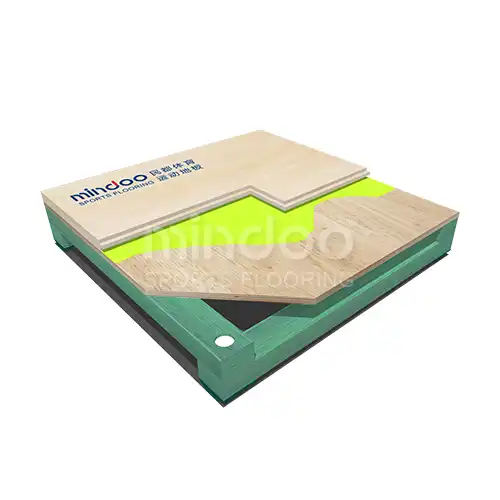
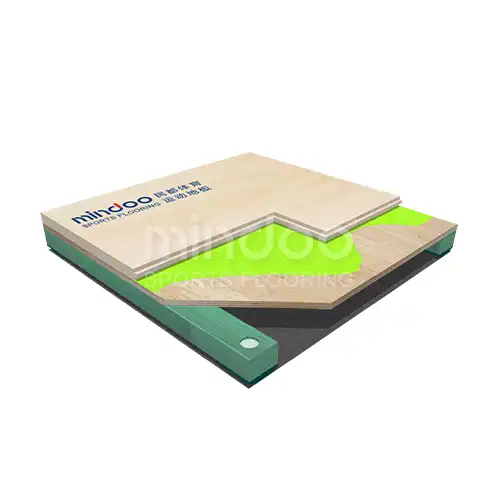
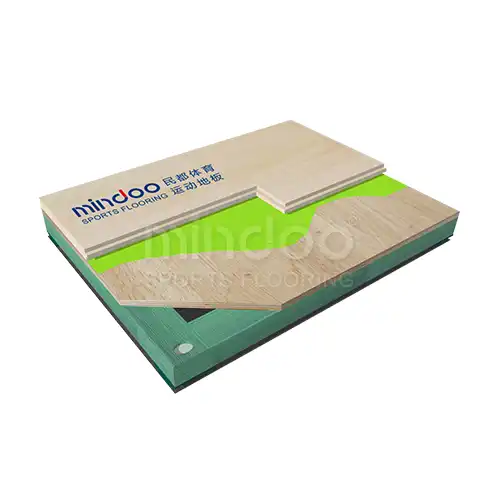
A comprehensive Wood Gym Floor specification sheet must include critical technical parameters such as shock absorption rates (≥53%), ball rebound coefficients (≥90%), vertical deformation limits (≤15%), rolling load capacity (1500N), and international certifications like FIBA or BWF. The sheet should detail wood species options (maple, oak, birch), surface thickness (20mm/22mm), total system height (90mm/130mm), plus installation guidelines, maintenance protocols, and warranty terms to ensure informed decision-making for sports facility projects.

Understanding Technical Performance Standards
Athletic flooring requests exact designing to meet competitor security prerequisites and office execution desires. Stun assimilation speaks to the most significant determination, measuring how viably the hardwood flooring framework diminishes affect strengths amid athletic exercises. Proficient sports organizations order least 53% stun assimilation to ensure competitors from joint wounds and fatigue.
Ball bounce back execution specifically impacts amusement quality over different sports disciplines. The determination must detail bounce back coefficients of at slightest 90%, guaranteeing steady ball behavior amid ball, volleyball, and other court sports. This estimation influences player execution and keeps up competitive judgment all through the facility's lifespan.
Vertical distortion determinations show the flooring system's adaptability beneath stack. Quality exercise room floor frameworks illustrate controlled misshapening not surpassing 15%, giving ideal adjust between comfort and steadiness. Rolling stack capacity of 1500N guarantees the surface withstands overwhelming hardware development without continuous damage.
Essential Wood Species and Material Specifications
Essential Wood Species and Material Specifications
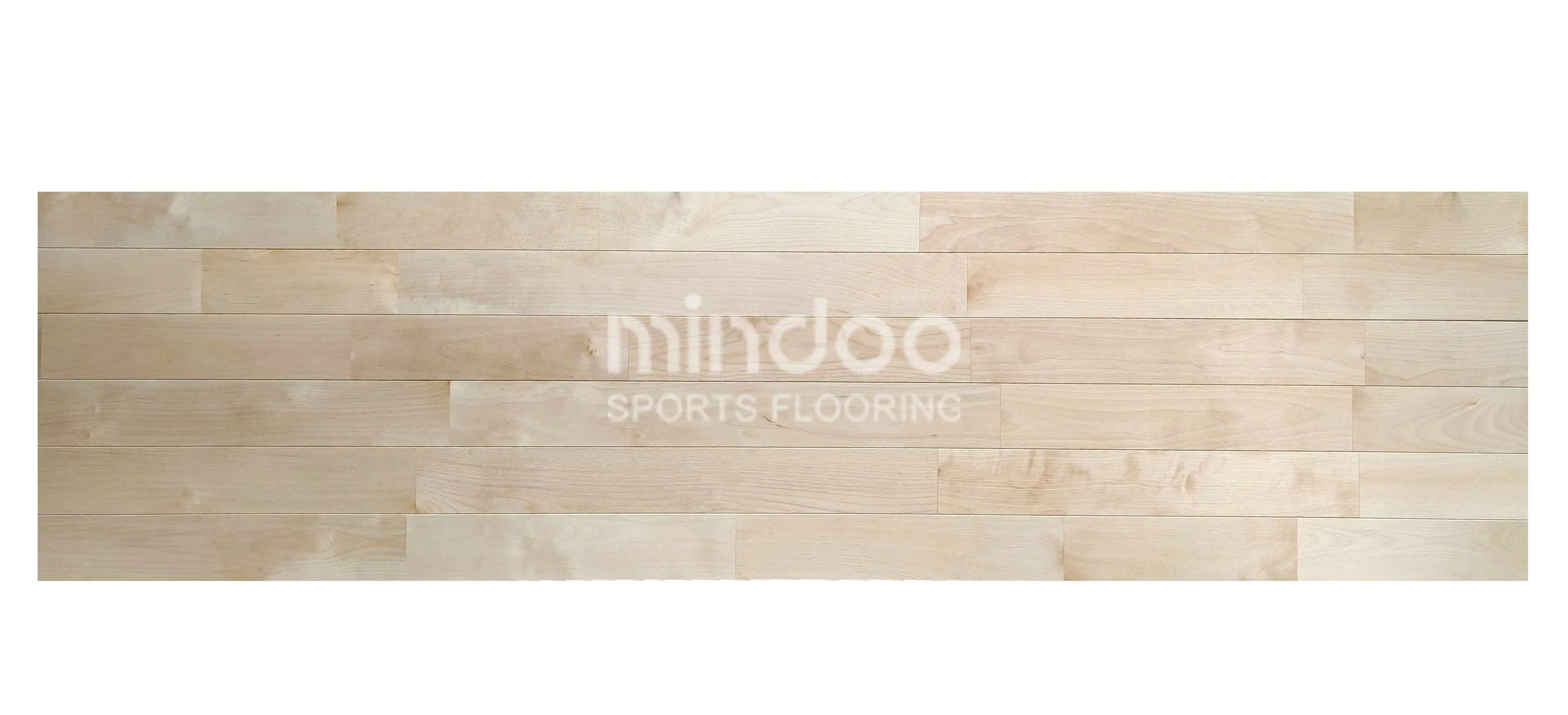
Maple wood remains the gold standard for athletic flooring due to its exceptional durability and performance characteristics. The specification sheet must clearly identify available wood species options, including maple, oak, and birch, each offering unique benefits for different applications and budget considerations. A premium Wood Gym Floor typically utilizes hard maple for its dense grain and consistent playability, while oak offers a distinctive aesthetic and birch can provide a cost-effective alternative for multi-use spaces.
Surface and System Thickness Specifications
Surface thickness details specifically impact floor execution and life span. Proficient establishments regularly include 20mm or 22mm best surface thickness, giving satisfactory wear resistance for heavy-duty utilize. The addition to framework height, whether 90mm or 130mm, influences subfloor arrangement requirements and ceiling clearance considerations. The choice between these profiles depends on the planning done concentrated manner, the need for underneath consolation, and the existing building framework, guaranteeing the introduced framework meets both execution and spatial constraints.
Moisture Resistance and Stability Documentation
Moisture safe properties merit point-by-point documentation in detail sheets. Indoor sports floor frameworks must illustrate soundness over shifting moisture conditions. Quality producers give point by point dampness substance details and dimensional stability appraisals to anticipate distorting, measuring, or crevices that compromise execution. This information is basic for guaranteeing the Wood Exercise center Floor keeps up its keenness and security over time, in any case of regular climatic changes or indoor environmental changes inside the facility.
International Certifications and Compliance Requirements
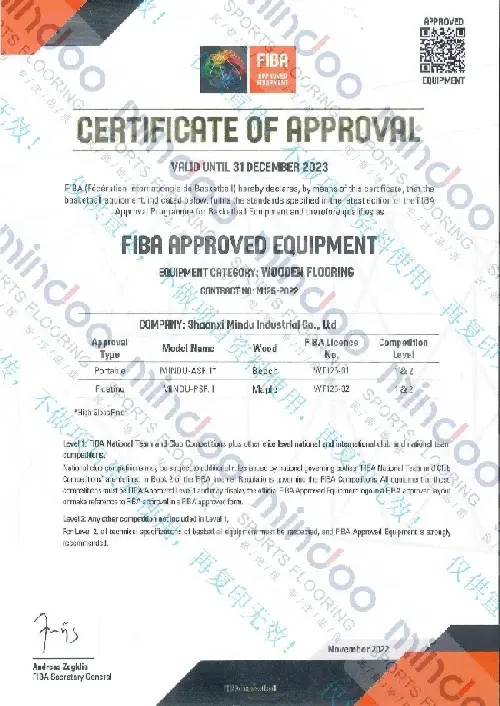
FIBA (Universal Ball League) and BWF (Badminton World Alliance) certifications approve floor frameworks that meet exacting universal measures. These certifications guarantee compatibility with proficient competition requirements and illustrate the producer's commitment to quality excellence.
Compliance documentation must incorporate test results from authorize research facilities, giving straightforward confirmation of execution claims. Sports flooring determinations ought to reference pertinent benchmarks such as Noise 18032-2 for indoor sports surfaces, guaranteeing administrative compliance across diverse markets.
Environmental certifications progressively impact detail choices. Eco-friendly flooring choices highlighting economical gathering hones and low-emission wraps up offer to ecologically cognizant office administrators. GREENGUARD or comparable certifications illustrate commitment to indoor discuss quality and inhabitant health.
Installation Guidelines and Subfloor Requirements
Installation Guidelines and Subfloor Requirements
Comprehensive specification sheets include detailed floor installation requirements, addressing subfloor preparation, moisture barriers, and expansion joints. Proper installation significantly impacts long-term performance, making these guidelines essential for contractors and architects planning projects. For a Wood Gym Floor, precise adherence to these specifications is critical to ensure durability, safety, and optimal performance under high-traffic conditions.
Subfloor Preparation and Moisture Testing
Subfloor specifications must address levelness tolerances, typically requiring surfaces within 3mm over 3 meters. Moisture testing protocols ensure subfloor conditions meet manufacturer requirements before installation begins. These specifications prevent costly failures and warranty disputes. Implementing rigorous moisture control is especially vital for a Wood Gym Floor to prevent warping, cupping, or adhesive failure, thereby maintaining a stable and reliable athletic surface over time.
Expansion Joint Design and Implementation
Expansion joint placement and construction details accommodate natural wood movement throughout seasonal changes. Specification sheets should provide clear guidance on joint spacing, materials, and finishing techniques to maintain aesthetic appeal while ensuring structural integrity. Properly designed expansion joints in a Wood Gym Floor allow for dimensional changes due to humidity and temperature fluctuations, reducing stress on the installation and preventing buckling or gaps that could compromise both function and appearance.
Maintenance Protocols and Lifecycle Specifications
Maintenance Protocols and Total Cost of Ownership
Floor maintenance requirements directly impact total ownership costs, making detailed care instructions essential specification components. Quality athletic flooring systems, such as a Wood Gym Floor, feature straightforward maintenance protocols that facility operators can implement cost-effectively. These protocols typically include daily cleaning, periodic screening, and recoating, which prevent the need for more expensive, intensive interventions. Clear specifications in this area empower operators to preserve the floor's performance and appearance while controlling long-term expenses, ensuring the investment is protected through predictable and manageable routine care.
Resurfacing Schedules and Budget Forecasting
Floor resurfacing schedules depend on usage intensity and maintenance quality. Specification sheets should outline expected maintenance intervals for floor sanding, recoating, and refinishing based on different use scenarios. This information helps facility managers budget appropriately for long-term care. For a Wood Gym Floor, specifications might detail recoating frequency for a high-school gym versus a university arena. Providing these projected timelines and cost implications allows for accurate financial planning, preventing unexpected capital expenditures and ensuring the floor's lifecycle is maximized through professionally timed interventions.
Repair Procedures and Operational Continuity
Floor repair procedures and replacement part availability affect operational continuity. Comprehensive specifications address damage repair methods, matching procedures for floor coatings, and component availability timelines to minimize facility downtime during maintenance activities. For instance, a Wood Gym Floor specification should include protocols for board replacement, finish blending, and lead times for specific flooring components. This ensures that repairs can be executed swiftly and seamlessly, maintaining the floor's integrity and safety with minimal disruption to sports schedules and facility operations.
Performance Testing and Quality Assurance
Rigorous testing conventions approve detailed claims and guarantee reliable item quality. Legitimate producers conduct normal testing of stun retention, ball bounce, and toughness characteristics utilizing standardized strategies and equipment.
Quality control methods during fabrication guarantee that each floor framework meets the distributed details. This incorporates crude fabric assessment, production checking, and final product testing some time recently shipment to client locations.
Floor footing details address slip resistance necessities for competitor security. Testing comes about ought to illustrate a satisfactory grasp beneath both dry and somewhat soggy conditions, obliging shifting office situations and cleaning schedules.
Warranty Terms and Service Support
Comprehensive guarantee scope illustrates producer certainty in their strong flooring items. Detail sheets must clearly lay out guarantee terms, scope confinements, and claim strategies to secure office speculations and give peace of mind.
Technical back accessibility makes a difference in resolving establishment questions and operational issues. Quality producers give progressive meeting services, investigation assistance, and replacement part sourcing throughout the floor's benefit life.
Training programs for office support staff maximize floor execution and expand benefit life. Detail sheets ought to reference accessible training assets and ongoing back services that help clients ensure their flooring investments.
Conclusion
Comprehensive Wood Gym Floor specification sheets serve as essential tools for successful athletic facility projects. They must include detailed technical performance parameters, material specifications, installation guidelines, and maintenance requirements to ensure informed decision-making and optimal outcomes.
Quality producers give straightforward, point by point determinations supported by universal certifications and thorough testing conventions. These records empower temporary workers, modelers, and office administrators to compare choices viably and select flooring frameworks that meet their particular execution and budget requirements.
Investing time in determination survey and producer choice pays profits through upgraded execution, diminished upkeep costs, and expanded floor life. Accomplice with experienced producers who give comprehensive back all through the whole venture lifecycle.
Partner with Mindoo for Premium Wood Gym Floor Solutions
Mindoo stands as your trusted Wood Gym Floor manufacturer, combining decades of expertise with cutting-edge production capabilities. Our self-owned factory ensures complete quality control from raw material selection through final installation, delivering consistent performance that exceeds international standards.
Ready to discuss your athletic flooring project requirements? Our technical specialists can help you develop comprehensive specifications that ensure optimal performance and long-term value. Contact us at sales@mindoofloor.com to schedule your consultation and discover why leading facilities choose Mindoo for their flooring needs.
References
1. International Association of Gymnasium Flooring Standards. "Performance Requirements for Indoor Sports Surfaces." Journal of Athletic Facility Engineering, Vol. 15, 2023.
2. Thompson, Michael R. "Shock Absorption Testing Methods for Wooden Sports Floors." Sports Surface Technology Quarterly, Issue 3, 2023.
3. Federation Internationale de Basketball Association. "Official Court Surface Specifications and Certification Guidelines." FIBA Technical Manual, 2023 Edition.
4. Rodriguez, Elena M. "Moisture Management in Hardwood Athletic Flooring Systems." Building Materials Science Review, Vol. 28, No. 4, 2023.
5. Chen, David K. "Comparative Analysis of Wood Species Performance in High-Traffic Sports Applications." Timber Engineering Today, March 2023.
6. International Sports Flooring Manufacturers Association. "Best Practices for Athletic Floor Installation and Maintenance." Industry Standards Publication, 2023.