No matter where you are in the world, FIFA Quality Standards are the most important rules for football artificial turf. These rules makesurfaces meet strict standards for performance, safety, and durability. These globally known certificates make sure that synthetic grass installations create the best conditions for playing no matter what the weather is like. These standards help cities, sports clubs, contractors, and facility managers make good choices about high-performance turf that is both cost-effective and high-quality.
Understanding FIFA Quality Certification Levels
There are two FIFA quality marks for football artificial turf: FIFA Quality and FIFA Quality Pro. Both of these certifications have to be tested in the lab and in the field to make sure they work the way they are supposed to.
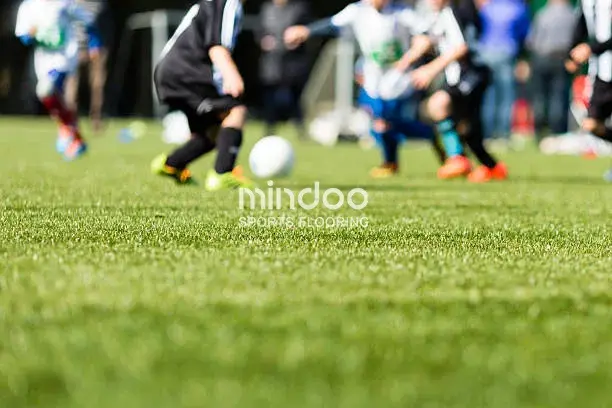
The FIFA Quality certification is good for schools, community sports fields, and other places where people go to have fun. This standard checks that the ball bounces enough, the players interact with the surface, and the surface lasts for normal use. The testing protocol makes sure that players are safe during high-intensity activities by checking how well shocks are absorbed, how much vertical deformation there is, and how much rotational resistance there is.
FIFA Quality Pro is the best kind, made for professional stadiums and high-quality training spaces. This certification needs to do better on all kinds of tests. These surfaces are more consistent and reliable, which is helpful for professional arenas that host official matches.
A lab that is not part of the field's installation team looks at turf samples as part of the certification process. The testing facility puts the fabric through simulated match conditions to see how well it holds up against the weather and how well water drains. This difficult test checks to see if performance remains the same over time in many different types of weather.
Essential Testing Parameters and Performance Metrics
FIFA quality assessments look at a number of technical factors that have a direct effect on both gameplay and the health of athletes. To mimic how grass behaves in real life, ball-surface interaction testing measures the bounce height, roll distance, and angular rebound.
- It's especially important to look at shock absorption properties during evaluation. When athletes land on the all-weather surface, the testing device measures the percentage of force that is reduced. The best shock absorption keeps the playing feel responsive and lowers impact stress on joints.
- Rotational resistance testing shows how cleats and the synthetic grass carpet work together when the direction changes. Balanced resistance stops both too much grip, which leads to injuries, and not enough grip, which hurts performance. The testing protocol tries to mimic a range of shoe configurations that are used a lot in professional football.
- Tests for weather resistance put samples through processes that make them age faster. Long-term stability of the turf fibers is proven by UV exposure, temperature cycling, and moisture testing. These tests are able to predict how well the structure will hold up and how well the color will stay over long periods of time.
- Controlled water application tests are used to find out how well the drainage system works. FIFA standards say how quickly water has to drain off so that the surface can quickly be ready to use again after it rains. Good drainage keeps the ground from getting soaked with water that could delay matches or practice.
Installation Requirements and Technical Specifications
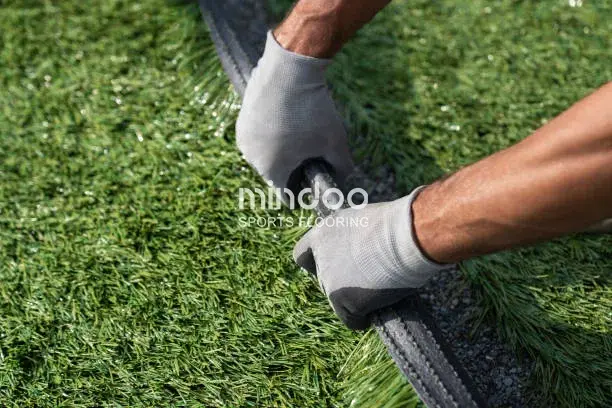
FIFA-compliant installations require that all technical details are followed exactly during the building process. The foundation design includes gradient, drainage, and shock-absorbing material needs that help the football artificial turf work its best.
- Engineered stone layers that give the structure support and help with water management are the start of base construction. The shock pad layer is usually made of cellular materials and plays a big part in how well the object can absorb impacts. This part needs to be carefully chosen in order to meet FIFA performance standards.
- Standard methods are used when installing turf to make sure that seam integrity and surface uniformity are maintained. Professional installers lay the rolls down with exact spacing and use special glues made for outdoor sports surfaces. Proper installation keeps consistent playing characteristics and stops early wear.
- The way infill material is chosen and spread out affects how the surface acts. FIFA standards list the hardness, particle size, and distribution density for different types of infill. The best mix of cushioning and stability comes from combining sand and rubber.
- Testing after installation makes sure that the finished surfaces meet the standards for certification. Independent inspectors check the whole football pitch to make sure the ball bounce is even, the shock absorption is good, and the drainage works.
Maintenance Protocols for FIFA-Certified Surfaces
Regularly caring for the turf is needed to keep FIFA quality standards during the entire time the surface is in use. Regular grooming keeps the fibers in the right direction and moves around the infill materials so that the playing conditions stay the same.
Debris removal, fiber brushing, and infill leveling are all things that are done every week to keep the system working. Specialized tools made for taking care of long-lasting playing surfaces make sure that the cleaning is done right and the synthetic fibers aren't harmed. Investing in the right maintenance tools makes surfaces last a long time.
Monthly deep cleaning procedures deal with organic matter that has built up and make sure that drainage is as good as possible. Professional turf cleaning tools get rid of dirt and other particles that can make the turf look bad or hurt how well it works. These methods keep the look and eco-friendly turf benefits.
Annual checks by qualified technicians find possible problems before they affect compliance with FIFA rules. Professional fiber wear analysis, infill depth measurements, and drainage system checks are all part of the job. Proactive maintenance keeps surfaces from needing to be replaced, which saves money and keeps the certification status.
How often you need to refill depends on how much you use it and the weather. Infill additions may need to be done more often in areas with a lot of traffic to keep the right depth and distribution. Keeping an eye on the infill levels makes sure that shock absorption and player safety continue to be effective.
Cost-Benefit Analysis for Different Facility Types
When local governments check out FIFA-certified installations, they need to think about the money they'll save in the long run as well as how much they'll need to pay at first. Even though high-quality football artificial turfs cost more at first, they are much more valuable because they don't need to be taken care of as much and last longer.
Synthetic field surfaces get rid of the costs that come with taking care of natural grass. Chemical treatments were gotten rid of, water conservation was used, and labor needs were lowered, all of which greatly lowered the operational budget. Over the normal 10–15 year service life, these savings add up to a lot.
FIFA certification makes sure that training conditions are always the same for sports clubs. When a facility is available regardless of the weather, it can be used more often and more money can be made. Professional-grade surfaces don't hurt performance even with a lot of use.
Install times and technical help are easy to plan for when using certified products, and contractors love this. Standardized specifications lower the risks in a project and make sure that the client is happy. Access to technical documentation and installation guidance makes it easier to get projects done.
Schools benefit from surfaces that can be used for many different sports and activities. Installations that are certified by FIFA can be used for football, soccer, and other recreational activities without needing separate spaces. This flexibility makes the most out of a small budget and still helps a wide range of users.
Conclusion
The FIFA Quality Standards are the hardest ones to meet for artificial turf. These rules make sure that the surfaces are safe, long-lasting, and good enough for professional-level play. Facility owners who are aware of these certification rules make smart decisions that keep the needs of performance and budget in mind.
FIFA-certified installations make sure that the conditions for playing are always the same. This makes things better for everyone who uses them, no matter if they are for community recreation or helping top-level athletes. A quality certificate will make people think better of your business, things will last longer, and costs will go down.
Mindoo is an experienced supplier, so you can be sure that your installation will meet all of FIFA's requirements and get the best deal if you work with them. A pro can help you pick out, install, and take care of your fake grass. This will make sure it works well and that you're happy with your purchase for a long time.
Why Choose Mindoo for Your FIFA-Certified Football Turf Project
Mindoo offers high-quality football artificial turf supplier solutions backed by a lot of knowledge about the field and proven installation skills. Our vertically integrated manufacturing method makes sure that the quality of the goods is checked at every stage, from choosing the raw materials to the final installation.
We can keep FIFA certification standards and still offer low prices because we own our own factory. Direct production oversight gets rid of markups from middlemen and keeps quality standards high during the whole manufacturing process. This method gives institutional and municipal customers who are careful with their money great value.
Mindoo's wide range of projects shows that they have done successful installations in many different kinds of buildings and weather conditions. Our skilled installers know exactly how to make sure that FIFA compliance is met, as well as other factors like time limits and site-specific needs.
Quality assurance protocols check that every installation meets FIFA standards before the project is finished. Independent testing shows that the surfaces meet all performance standards, and our warranty gives you long-term peace of mind. Our promise to excellence means that your investment will always work well for as long as you use it.
To talk about your exact needs and learn how our FIFA-certified products can make your sports facility a world-class venue, email us at sales@mindoofloor.com.
References
- FIFA Quality Programme for Football Turf: Technical Manual and Guidelines. Federation Internationale de Football Association, 2022.
- McNitt, Andrew S., et al. "Performance Standards for Synthetic Turf Used in Sports Applications." Sports Technology Journal, vol. 15, no. 3, 2021, pp. 45-62.
- European Synthetic Turf Council. "Installation and Maintenance Guidelines for FIFA Quality Certified Surfaces." ESTC Technical Publication, 2023.
- Sports Turf Research Institute. "Long-term Performance Analysis of FIFA Certified Artificial Grass Systems." STRI Research Report, 2022.
- International Association of Sports Surface Sciences. "Testing Protocols for Synthetic Sports Surfaces: A Comprehensive Review." Journal of Sports Surface Technology, vol. 28, no. 4, 2023, pp. 112-128.
- World Sports Flooring Association. "Quality Standards and Certification Processes for Artificial Sports Surfaces." WSFA Technical Handbook, 2022.